By futureTEKnow | Editorial Team
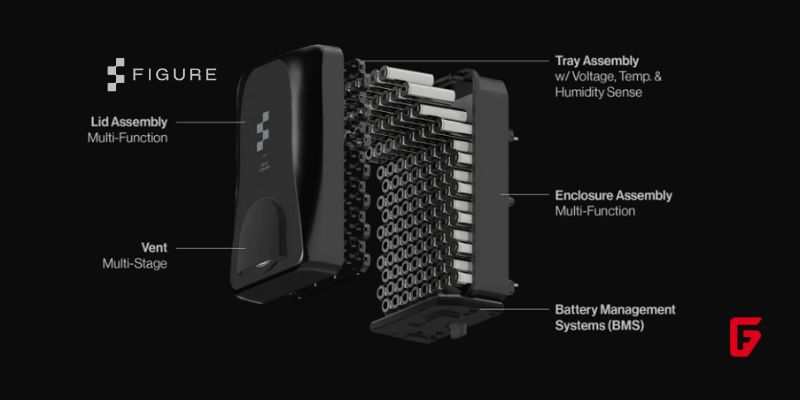
Figure’s F.03 battery does far more than power the robot; it becomes an integral part of the robot’s structure. By using the battery casing as a structural component, Figure has managed to double the capacity of its battery system and cut down excess weight at the same time. This clever integration makes the robot lighter, more durable, and more efficient.
Energy Density: The F.03 boasts a 2.3 kWh capacity, delivering up to five hours of peak performance runtime, a stunning 94% increase in energy density over previous generations.
Form Factor: Gone is the old, bulky external backpack. With innovative stamped steel and die-cast aluminum (which works as a heat pipe), the battery is now embedded into the torso. Structural adhesives tie it all together, improving both strength and thermal management.
Charging & Cooling: Fast-charging is available at 2 kW, keeping robots quickly ready for action, while active forced air cooling ensures thermal stability even under demanding conditions.
Smart Battery Management: A custom Battery Management System (BMS) maintains battery health, optimizes performance, and integrates a robust safety network of sensors, switches, and fuses to guard against overcharging, overheating, and short circuits.

Battery safety is non-negotiable, and Figure’s F.03 leads the industry:
Thermal Runaway Protection: The integrated design features a thermal insulative potting compound and a rapid heat distribution system, stopping thermal events from spreading between cells.
Flame Containment: With a flame arrestor vent and patented flame-containment tech, any potential incident is kept inside the pack.
Short Circuit Safeguards: The wirebond interconnect geometry acts as a fuse, cut off in the event of a short, adding an extra layer of protection.
Certification: The F.03 is set to be the first humanoid robot battery certified to UN38.3 and UL2271 safety standards for batteries, after comprehensive testing with a US Nationally Recognized Testing Laboratory.
Traditional robot battery updates often hit the wall of energy density vs. safety vs. bulkiness. Embedding the battery’s case directly into the robot’s skeleton flips the script:
Improved Weight Distribution: Better balance and agility for the robot, crucial in environments where robots need to move skillfully.
Reduced Complexity: Fewer standalone modules, quicker manufacturing, and easier maintenance.
Manufacturing Scalability: Figure’s design supports large-scale production—up to 12,000 robots per year—thanks to this integrated approach.
The superior energy density of the F.03 approaches benchmarks set by leading lithium-ion battery technologies, but Figure’s focus on structural integration and safety engineering stands out. This design philosophy may well set the template for next-generation mobile robotics—where every gram counts and every cell needs to be safe and smart.
Structural batteries are not just a power source—they’re redefining robot construction.
Emphasis on energy density, safety, and intelligent integration is raising the bar for the whole robotics sector.
Expect more robots with longer runtimes, safer operation, and robust, lightweight skeletons rolling off production lines soon.
As humanoid robots learn to walk, talk, and work alongside humans, advances like Figure’s F.03 will be at the heart of their evolution—keeping these machines moving, resilient, and ready for the real world

Explore the cutting-edge ways AI is enhancing Lean Six Sigma, from real-time process insights to predictive controls, ushering in a new era of operational excellence and efficiency.

Facing supply chain challenges in 2025? High-performing teams leverage AI for risk management, demand forecasting, supplier analytics, and end-to-end visibility to ensure business continuity and resilience.

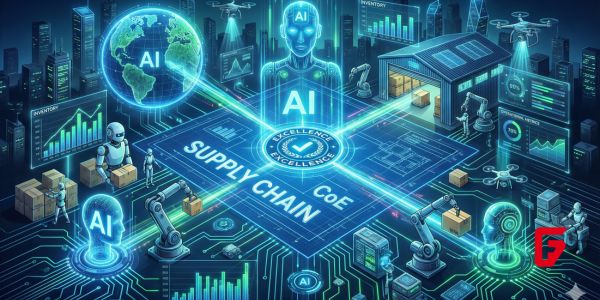
Craft an AI-powered supply chain Center of Excellence that unifies control tower visibility, analytics, and inventory optimization into one strategic hub. Explore this blueprint to learn how a modern supply chain CoE drives resilience, smarter decisions, and operational excellence in the age of AI.

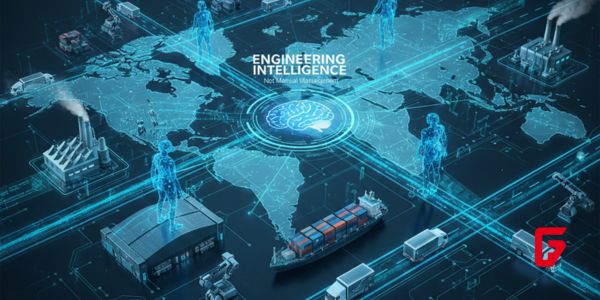
Supply chain leadership is being redefined by AI, intelligent automation, and agentic decision-making, demanding leaders who can engineer end-to-end intelligence rather than simply manage workflows. This article explores how next-generation supply chain leaders will combine data, algorithms, and human judgment to build resilient, adaptive, and high-performing global operations.

Bridgit Mendler’s Northwood Space is pioneering mass-produced ground stations, enabling scalable, high-speed connectivity for the new era of satellite networks and megaconstellations.

SpaceX aims to nearly double launches from Vandenberg in 2025, facing support from federal agencies but strong objections from the state and local communities.

Traditional Medicare will pilot AI-assisted prior authorization in 2026 across six states, focusing on high-risk outpatient services. Clinicians retain final say, but incentives and access concerns loom as CMS tests fraud reduction and “gold card” exemptions. Here’s what providers and patients should know.

OpenArt’s new “one-click story” compresses scripting, visuals, and edits into ready-to-post short videos—fueling viral growth and a fresh IP debate. We break down how it works, adoption signals, what’s next (multi-character, mobile), and practical guardrails creators and brands should follow to stay original and compliant.

OpenAI’s o3 swept the Kaggle AI chess tournament, defeating xAI’s Grok 4–0. The victory fueled the intense rivalry between Altman and Musk, reshaping AI benchmarks.

NASA and Google’s AI-powered Crew Medical Officer Digital Assistant enables autonomous diagnoses for astronauts on Mars missions, redefining remote healthcare for space and Earth.

Pinterest’s CEO confirms that fully agentic AI shopping is years away, as the platform invests in AI-powered tools to enhance discovery, inspiration, and personalized shopping experiences for millions.

Shopify’s new AI shopping tools are transforming e-commerce, letting agents and chatbots deliver smooth, personalized shopping and checkout experiences across platforms. Learn how these innovations reshape online retail.
To provide the best experiences, we use technologies like cookies to store and/or access device information. Consenting to these technologies will allow us to process data such as browsing behavior or unique IDs on this site. Thanks for visiting futureTEKnow.