
Startups & Business News
Zoox Makes History: First U.S. Exemption for Driverless Robotaxis
KEY POINTS
Zoox becomes the first American company to receive a federal exemption for testing robotaxis without manual controls.
The exemption allows Zoox’s purpose-built autonomous vehicles—with no steering wheels or pedals—to operate on public roads for demonstration and eventual commercial use.
The NHTSA’s new AV STEP framework paves the way for U.S. automakers to test and deploy fully autonomous vehicles without the need for traditional driver controls.
Zoox aims to launch commercial robotaxi service in Las Vegas this year before expanding to additional U.S. cities.
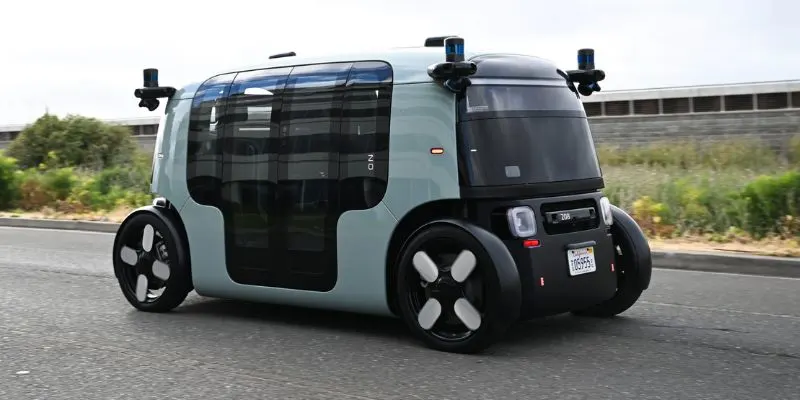
When it comes to the future of transportation, this week may go down as the date when the United States steered squarely into the era of fully autonomous vehicles. Amazon’s Zoox, after years of innovation—and regulatory roadblocks—just landed a historic federal exemption that lets its steering-wheel-free robotaxi fleet hit public roads, officially making them the first American automaker to unlock this privilege.
What sets Zoox apart is not just the technology, but the fact that its vehicle was designed from the ground up to be driverless. Forget about retrofitting a sedan or van and slapping on some cameras—Zoox’s vehicle has no steering wheel, pedals, or side mirrors, and features four inward-facing seats that create a carriage-style seating arrangement, making every ride feel more like a shared experience than a solo commute.
What Does Zoox’s Exemption Mean for U.S. Autonomous Vehicles?
Up until now, U.S. regulations essentially required all cars—even self-driving ones—to include the basics for human drivers: steering wheels, pedals, mirrors. That’s been a major speed bump for companies with true “from-scratch” AV visions. Zoox’s exemption, granted under the newly expanded Automated Vehicle Exemption Program (AV STEP), is a game-changer for American innovators.
The exemption allows Zoox to demonstrate and test its custom-built robotaxis on public roads, and it’s the first under a NHTSA program that now covers U.S. companies (previously, only foreign AV makers could apply).
This greenlight came after the NHTSA resolved a year-long investigation into whether Zoox’s vehicles were violating federal motor vehicle safety standards, which require hardware for human drivers. Having applied for an official exemption, Zoox must now cover or remove statements that its cars comply with these standard rules—because, technically, they do not.
The new regulatory pathway encourages “innovative designs, such as prototype vehicles, through a rigorous review process that considers overall safety,” says NHTSA’s Chief Counsel.
This means it’s officially possible for U.S.-based automakers to test (and soon, deploy) robotaxis that don’t need a driver—putting America neck-and-neck with global AV leaders.
How Soon Will Robotaxi Services Be a Reality for Everyday Americans?
So, when will you be able to hail a Zoox robotaxi as easily as you grab an Uber? According to official statements, demonstration rides in Las Vegas are starting this year, with commercial launches to follow once the next round of approvals is secured. Zoox’s roadmap includes expansion to San Francisco, Austin, Miami, Los Angeles, and Atlanta.
The company already opened a 220,000-square-foot facility in California capable of churning out over 10,000 robotaxis a year, underscoring its ambitions for scale.
Unlike other AV players that retrofit vehicles, Zoox’s unique, bidirectional shuttles are battery-powered, designed for up to 16 hours of daily use, and aim for a five-year or 100,000-mile operational lifespan.
High-profile partners in Las Vegas, such as AREA15 and Resorts World, are on deck for dedicated pickup locations, setting the stage for a real-world debut.
Passengers who step into Zoox’s all-electric carriage will enter a space built for conversation, relaxation, and—most importantly—hands-free travel. By eliminating the steering wheel, Zoox is betting big on a future where technology, not human reflexes, handles the road.
Why Did Zoox Get Approved, and What’s Next for U.S. AV Policy?
The decision wasn’t made lightly. Regulators spent over a year scrutinizing the safety protocols, technology, and data behind Zoox’s approach. What finally tipped the scales?
Zoox’s willingness to work closely with the NHTSA, applying for an exemption after initial self-certification, showed transparency and a commitment to compliance.
Transportation Secretary Sean Duffy described the move as a “win-win for safety and innovation,” emphasizing that America, not China, can and will drive the future of self-driving cars forward.
Zoox must now maintain strict operational oversight and can only demonstrate vehicles under the exemption for now; a separate application will be needed for broad commercial deployment.
For the AV industry, it’s more than a win for a single company; it signals a regulatory turning point. With the NHTSA’s streamlined application process and willingness to update policies for homegrown innovators, other U.S. companies could soon follow Zoox’s lead.
We’re witnessing the dawn of truly driverless robotaxis—built in America, approved in America, and soon, possibly, driving you across town with no steering wheel in sight.

futureTEKnow
Editorial Team
Discover the companies and startups shaping tomorrow — explore the future of technology today.
Most Popular



Trending Companies
Latest Articles
futureTEKnow is focused on identifying and promoting creators, disruptors and innovators, and serving as a vital resource for those interested in the latest advancements in technology.
© 2026 All Rights Reserved.