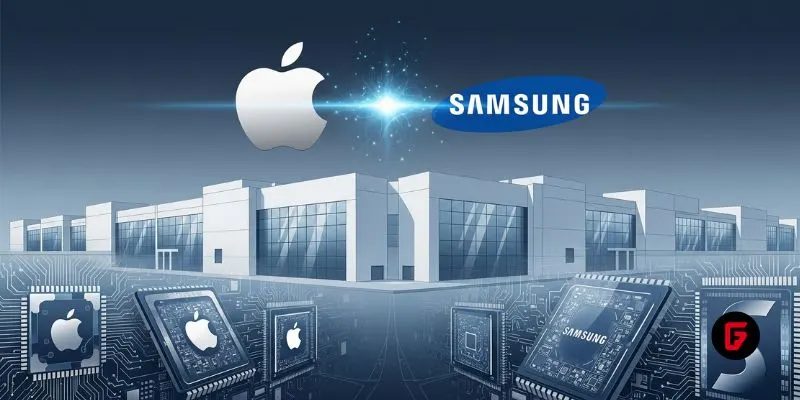
Why is Apple Teaming Up With Samsung in Texas for iPhone Chips?
Apple’s new partnership with Samsung goes far beyond just sourcing parts. Under this agreement, Samsung’s Austin, Texas, facility—already an industry powerhouse with $18B in investments—will produce critical chips for future Apple products, starting with the iPhone 18 series set for release in 2026. The deal is the centerpiece of Apple’s audacious $100B U.S. manufacturing expansion, aimed at insulating its supply chain from international uncertainty.
Why now? Apple faces mounting tariff threats after President Trump proposed a punishing 100% tax on imported semiconductors. The only remedy? Build in the U.S. The partnership lets Apple sidestep these tariffs, reinforce its domestic supply chain, and anchor high-tech jobs in America.
But there’s a deeper tech story here. Samsung’s Austin foundry will produce cutting-edge chips using manufacturing technology “never used before anywhere in the world”—most likely in the form of revolutionary image sensors for iPhones.
What’s Special About Samsung’s 3-Layer Stacked Image Sensor Technology for Apple?
Samsung is raising the bar with a three-layer stacked CMOS image sensor, billed as a leap beyond Sony’s Exmor RS chips. This “PD-TR-Logic” configuration separates the sensor’s photodiode, transfer, and logic layers. The result? Lightning-fast image capture, stunning dynamic range, lower noise, and enhanced low-light performance—key for the ever-escalating “camera wars” in flagship smartphones.
Industry insiders believe Samsung will begin delivering these advanced 48MP sensors as early as 2026, finally breaking Sony’s decade-long monopoly as Apple’s sensor supplier. For iPhone users, this means improved photo quality (especially in challenging lighting), instant-shutter performance, and premium features like high-frame-rate 8K video.
Samsung’s Austin plant will be the proving ground for this technology, accelerating the global shift in chip innovation from classic manufacturing hubs in Asia to new U.S. strongholds.
Strategic Impacts and the Future of U.S. Chipmaking
Domestic Supply Chain: Apple’s initiative is ambitious: 19 billion chips, made in America, powering everything from iPhones to AI servers. By diversifying supply beyond Sony and leveraging U.S. industrial capacity, Apple gains resilience against geopolitical shocks while supporting American jobs.
Tariff Bypass: With the new tariffs looming, this move is as much about economics as it is about tech. Tapping Samsung’s U.S. facility (and TSMC’s Arizona plant) lets Apple avoid additional costs and reduces its foreign dependency.
Tech Ecosystem Growth: Samsung’s Austin expansion—including two new fabs and R&D facilities—is projected to add thousands of jobs and cement Central Texas as a semiconductor innovation hub.
Industry Shake-Up: For Samsung, the deal secures a coveted customer, follows hot on the heels of a $16.5B AI chip contract with Tesla, and allows it to chip away at Sony’s dominance in image sensors.
As the global tech supply chain runs headfirst into a new age of protectionism and local manufacturing, Apple and Samsung have drawn a line: the next wave of breakthroughs will be made in America. Expect the battle for silicon supremacy to ignite ever more innovation—for smartphones and far, far beyond.