
Startups & Business News
TALOS: The AI Agent Revolutionizing Space Force Training
KEY POINTS
TALOS by Slingshot Aerospace delivers AI-driven, real-world simulation for U.S. Space Force satellite operator training.
It can simulate adversarial satellites, space maneuvers, and combat using machine learning in a physics-accurate orbital environment.
Integrates with live mission data to provide decision support, upgraded situational awareness, and adaptive threat simulations.
Already tested by the 57th Space Aggressors Squadron—accelerating scenario design, mission realism, and preparedness for contested space.
Ushering in a New Era of Military Space Training
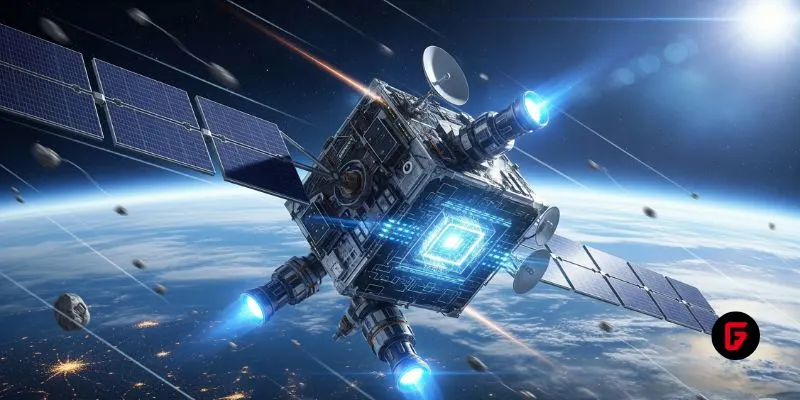
There’s a revolution happening in orbit—and it’s powered by artificial intelligence. Slingshot Aerospace has unveiled TALOS (Thinking Agent for Logical Operations and Strategy), a cutting-edge AI agent purpose-built to train U.S. military satellite operators for the challenges of today’s space domain. As space becomes more congested and contested, traditional training just can’t keep up. Enter TALOS, designed to bridge that gap with a blend of realism, adaptability, and machine-speed strategy.
Why AI Matters for Space Operations
The modern space battlefield is unpredictable, fast-paced, and filled with evolving threats—think hostile satellites, orbital debris, and adversary tactics that change in an instant. TALOS meets those challenges head-on by:
Simulating complex, adaptive adversary behaviors such as evasive maneuvers or aggressive “dogfighting” moves at a speed no human team can match.
Creating fully physics-based orbital environments, ensuring operators aren’t just playing games, but learning what real-world physics, tactics, and consequences would look like in space.
Continuously evaluating scenarios, reasoning through strategy options, and autonomously choosing optimal moves to challenge trainees at every skill level.
This isn’t just another simulator—TALOS learns from real satellite operations, clones authentic tactics, and brings unprecedented realism to mission training.
Tested by the Space Force—Built for Complexity
Recently, the U.S. Space Force’s 57th Space Aggressors Squadron took TALOS for a test drive. The agent simulated hostile tactics at “machine speed,” pushing the realism and scale of training to new heights. With TALOS, Space Force trainees could face not only more opponents but smarter ones—capable of adapting and evolving during an exercise. This means richer scenarios, faster iteration, and better preparation for events like the Space Flag exercises, where readiness is mission-critical.
Slingshot’s deep partnership with the Space Force’s Operational Test and Training Infrastructure (OTTI) ensures TALOS reflects actual threats and prepares operators for them.
Real-World Relevance—Beyond the Simulator
TALOS isn’t confined to just simulated training. By integrating Slingshot’s global sensor network and mission intelligence datasets, the AI agent:
Monitors live orbital environments.
Assesses evolving threats using data from millions of observations each day.
Supports operators in the field with real-time recommendations—boosting mission safety, agility, and longevity.
Whether it’s identifying anomalies, suggesting maneuvers, or flagging potential dangers, TALOS provides rapid, data-informed decision support for both training and real missions.
A Look Inside the Technology
What makes TALOS stand out?
Behavior Cloning Pipeline: TALOS learns by observing real spacecraft behaviors, enabling it to mimic authentic tactics, not just scripted actions.
Physics-Accurate Simulation Engine: Powered by Slingshot’s PHASE engine, the environment models every aspect—gravity, drag, collision risk, and orbital mechanics—true to life.
Scalability: TALOS can expand the scope and complexity of adversary forces as needed, meaning no two training sessions are ever the same.
Actionable Insights: Paired with Slingshot’s proprietary datasets, TALOS offers operators continuous situational awareness and mission support.
Why TALOS Changes the Game
In a domain where fractions of a second matter and surprises are the norm, having AI like TALOS “in your corner” gives allied space operators a unique edge. Training isn’t just about following procedures—it’s about thinking, adapting, and winning in a rapidly evolving theater.
Slingshot Aerospace’s TALOS proves that AI can do more than automate—it can raise the standard, making human operators sharper, faster, and better prepared for space’s ultimate test: unpredictability.
The future of space defense training has arrived, and it looks a lot like TALOS: smart, adaptable, and relentlessly real-world.

futureTEKnow
Editorial Team
Discover the companies and startups shaping tomorrow — explore the future of technology today.


Trending Companies
Latest Articles
futureTEKnow is focused on identifying and promoting creators, disruptors and innovators, and serving as a vital resource for those interested in the latest advancements in technology.
© 2026 All Rights Reserved.