
Startups & Business News
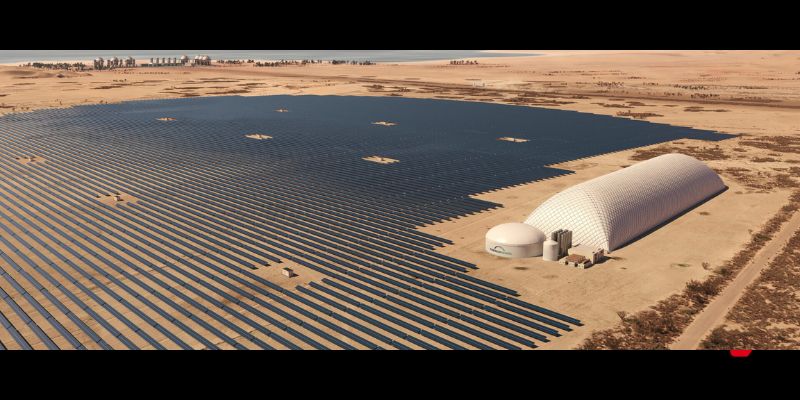
Game-Changing Collaboration Targets Clean, Reliable Power
In a landmark move for the global energy transition, Google has announced its first-ever commercial long-duration energy storage partnership with Milan-based innovator Energy Dome. This strategic alliance isn’t just about big tech headlines—it’s about overcoming one of clean energy’s thorniest challenges: storing vast amounts of renewable energy for hours, not minutes, enabling truly round-the-clock, carbon-free power.
Why Long-Duration Storage Matters
As demand for electricity surges—driven by artificial intelligence (AI), data centers, and global electrification—wind and solar power are leading the charge. But these sources are inherently variable. The sun doesn’t always shine. The wind doesn’t always blow. That’s where long-duration storage enters the picture, providing what the industry calls “firm” power: clean electricity whenever it’s needed.
Energy Dome’s flagship solution? The CO₂ Battery
The CO₂ Battery—a system capable of storing renewable energy for 8 to 24 hours, far beyond what lithium-ion batteries can manage. Here’s how it works:
During periods of excess solar or wind power, the system compresses carbon dioxide into liquid using renewable electricity.
When energy is needed again, the liquid CO₂ expands into gas, driving a turbine and releasing energy back to the grid.
The process operates on a closed loop, and CO₂ is reused—making it both efficient and sustainable.
Scale, Speed, and Resilience: The Partnership Impact
Google’s rationale for choosing Energy Dome’s tech is crystal clear: scalable solutions, rapid deployment, and cost-effectiveness at a global level. The CO₂ Battery uses off-the-shelf components, avoiding supply chain bottlenecks, and delivers not just energy, but crucial grid-stabilizing services—providing the inertia that wind and solar lack, and cushioning the grid against frequency fluctuations as old fossil plants retire.
The partnership will see deployments across Europe, the U.S., and Asia-Pacific—rapidly scaling toward Google’s target of 24/7 carbon-free operations by 2030. In Wisconsin, for example, regulators have approved a project that will utilize Energy Dome’s tech to power roughly 18,000 homes for ten hours on a single charge.
Shifting the Energy Frontier
This collaboration signals a pivotal acceleration in commercializing long-duration storage. Google’s investment—as both customer and backer—underscores its genuine commitment to a clean energy future. It’s not just a bet on one technology, but a push for a flexible, resilient, and decarbonized grid.
In the words of Claudio Spadacini, Energy Dome’s CEO, this is about “proving that 24/7 cost-effective and carbon-free energy supply is achievable with the right technology and partnership model.”
Key Highlights for the Future
First global deal for long-duration storage between major tech and energy startup.
CO₂ Battery’s 8–24 hour storage capability enables true renewable baseload power.
Scalable, modular, and supply-chain safe via common industrial components.
Delivers both energy storage and grid-stabilization—vital as renewables push out fossil fuels.
Partnership supports a pipeline of projects on three continents, with construction and deployment underway through 2030.
Long-duration storage is no longer on the horizon—it’s here, and Google and Energy Dome are leading the charge.

futureTEKnow
Editorial Team
Discover the companies and startups shaping tomorrow — explore the future of technology today.
Most Popular
Trending Companies
Latest Articles
futureTEKnow is focused on identifying and promoting creators, disruptors and innovators, and serving as a vital resource for those interested in the latest advancements in technology.
© 2026 All Rights Reserved.