






























Houston, Texas, USA
2024
Humanoid Robotics, Shipbuilding, Maritime, Construction, Energy, Manufacturing, Industrial Automation, Metal Fabrication, Infrastructure
Persona AI is a robotics company developing industrial humanoid robots designed to perform skilled physical work in demanding environments. The company combines artificial intelligence, robotic manipulation, bipedal mobility, and modular hardware to create robots capable of working with industrial tools and equipment. Its technology focuses on physical AI for heavy industry, particularly shipbuilding, manufacturing, construction, and energy infrastructure. Unlike humanoid robots developed primarily for household assistance or warehouse logistics, Persona AI is engineering robotic systems for industrial trades such as welding, fabrication, inspection, and maintenance.
Persona AI designs and develops humanoid robotic systems for skilled industrial labor, focusing on tasks that are physically demanding, hazardous, or difficult to automate using conventional industrial robots.
The company is building a modular humanoid platform capable of working in shipyards, fabrication facilities, construction sites, and energy infrastructure. Its targeted capabilities include welding, grinding, material handling, assembly, equipment inspection, and maintenance.
Persona AI also develops robotic teleoperation and autonomous control technologies that allow human operators to supervise complex tasks while the robot manages aspects of movement and physical coordination.
Its approach is intended to help industrial organizations address skilled labor shortages without completely redesigning existing workplaces around fixed automation equipment.
The company is progressing toward commercial deployment, with its leasing program targeting initial customer deployments in 2027.
Persona AI’s technology combines embodied artificial intelligence, humanoid robotics, and advanced motion control to develop machines capable of performing industrial tasks in environments originally designed for human workers.
Its robotic platform uses a bipedal configuration, articulated arms, and dexterous manipulation systems to support movement, tool handling, and physical interaction. The company is engineering the robots to navigate uneven surfaces, work around industrial equipment, and perform tasks requiring controlled movements.
A central part of its development strategy is human-in-the-loop teleoperation. Skilled operators use immersive motion capture and extended reality (XR) interfaces to control task execution, while onboard machine learning manages lower-level functions such as balance, joint planning, and footing.
This approach allows Persona AI to collect real-world task data while gradually developing more autonomous robotic behaviors.
The company also uses physics-based simulation and digital twins to model robotic movements and industrial environments. Its development work incorporates NVIDIA Isaac Lab and Isaac Sim, enabling engineers to test behaviors, simulate operating conditions, and develop robotic control systems before physical deployment.
Persona AI’s modular hardware architecture is designed to support interchangeable components, industrial tooling, and field maintenance. The company is also developing protective exterior systems to help its robots withstand dust, heat, welding debris, and other demanding industrial conditions.
Together, these technologies support the development of industrial humanoids that combine human supervision with increasingly autonomous physical capabilities.
Persona AI represents an emerging direction in humanoid robotics for skilled industrial work, extending physical AI beyond warehouse automation and general-purpose demonstrations.
Many industrial environments, particularly shipyards and construction sites, are difficult to automate because equipment, workspaces, and tasks change frequently. Conventional robotic arms often require fixed installations and carefully structured production areas.
Persona AI is addressing this limitation by developing mobile humanoid robots capable of using existing industrial tools and operating in workplaces designed for people.
Its focus on welding, fabrication, and maintenance is particularly relevant to industries experiencing shortages of skilled technical workers.
The company’s teleoperation-based development strategy also illustrates how human expertise can contribute to training increasingly autonomous robots. Its commercial significance will depend on demonstrating reliable performance, safety, and economic value in actual industrial operations.
Persona Humanoid is the company’s primary modular industrial humanoid robot platform, designed for skilled physical tasks in shipyards, manufacturing facilities, construction sites, and energy infrastructure.
The robot features a bipedal configuration, articulated manipulation systems, and an industrial-oriented hardware architecture. It is being developed to handle conventional tools and operate in environments containing uneven flooring, industrial equipment, and changing work conditions.
Its modular design supports component replacement, maintenance, and adaptation to different industrial applications.
Persona AI is developing task-specific configurations of its humanoid platform for different industrial activities.
The company identifies several intended roles, including Welder, Fabricator, Assembler, and Miner. These configurations share the underlying humanoid architecture but are intended to support different tools, operating requirements, and physical tasks.
The Welder configuration targets welding operations in shipyards and fabrication facilities, while the Fabricator and Assembler configurations focus on metalworking and industrial assembly. The Miner configuration is intended for hazardous mining environments.
These are proposed application configurations rather than independently established commercial robot models.
Persona AI offers a Robot-as-a-Service-style leasing program for organizations interested in evaluating and deploying its industrial humanoids.
The program includes planned access to humanoid hardware, autonomy software, industrial tooling modules, software updates, and employee training.
Its commercial structure includes one-year pilot arrangements and longer deployment terms. The company’s April 2026 brochure identifies the third quarter of 2027 as its targeted deployment period, with some development units potentially available earlier.
The program is designed to allow industrial customers to evaluate humanoid robotics without purchasing the equipment outright.
Persona AI is developing humanoid robots for shipbuilding and maritime manufacturing, where targeted applications include welding, grinding, painting, hull assembly, and work in confined compartments.
In metal fabrication and manufacturing, its robots are being designed to handle tools, move materials, assist with assembly, and perform repetitive production tasks that require mobility and dexterity.
For construction, potential applications include fabrication, equipment handling, and work across changing job-site conditions where fixed automation is difficult to install.
In the energy sector, Persona AI is targeting inspection, maintenance, and equipment servicing across oil and gas facilities, utilities, and power infrastructure.
The company also identifies mining as a potential application for humanoid robots operating in hazardous environments.
These are primarily development targets and planned commercial applications; they should not all be interpreted as independently verified, fully autonomous production deployments.
Persona AI uses human teleoperation, machine learning, and simulation to develop robotic capabilities. Skilled operators demonstrate tasks through motion-capture and extended-reality interfaces, generating data that can be used to train increasingly autonomous behaviors.
Persona AI is developing humanoid robots for welding, including shipbuilding and pipe fabrication. Its targeted capabilities include tool handling, seam tracking, and welding in difficult-to-access locations. These capabilities remain under development, and broad production-level performance has not been independently established.
Humanoid robots can potentially navigate existing industrial workplaces, carry conventional tools, and access locations that fixed robotic arms cannot easily reach. Persona AI is developing this approach for shipyards, construction sites, and fabrication facilities where installing fixed automation can require substantial changes.
Persona AI is developing a combination of teleoperation and autonomy. Human operators currently play an important role in directing complex industrial tasks, while onboard control systems handle functions such as balance and joint coordination. The company uses this approach to develop more autonomous capabilities over time.
Persona AI’s April 2026 leasing brochure identifies Q3 2027 as its target for customer deployments, with the possibility of earlier development units for participating customers. This is a planned schedule rather than confirmation of general commercial availability.
Have an update, correction, or additional information about this company? Help us keep the futureTEKnow company database up to date by submitting the latest company information.

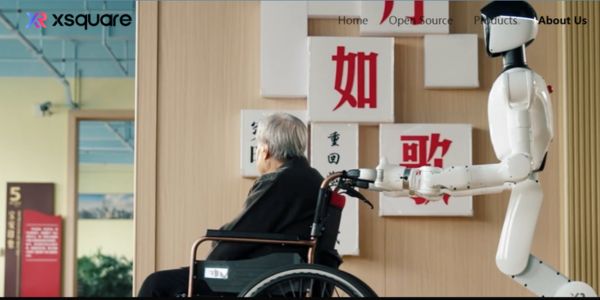
X Square Robot has raised $276M from Xiaomi, Sequoia China, and other internet giants to scale its WALL-A embodied AI model and wheeled humanoid robots from household cleaning into factories, logistics, and eldercare, reshaping how physical work is automated in China.
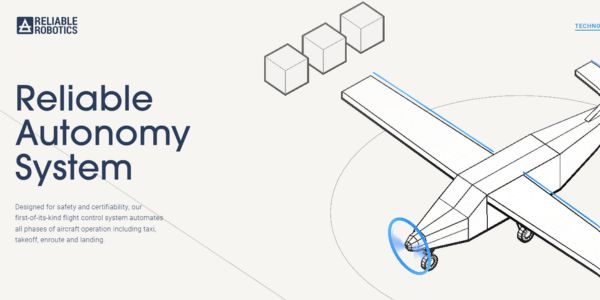
Reliable Robotics has secured $160M to scale production and deployment of its Reliable Autonomy System. This funding marks a pivotal transition for the company as it prepares for commercial cargo operations and works toward final FAA certification.
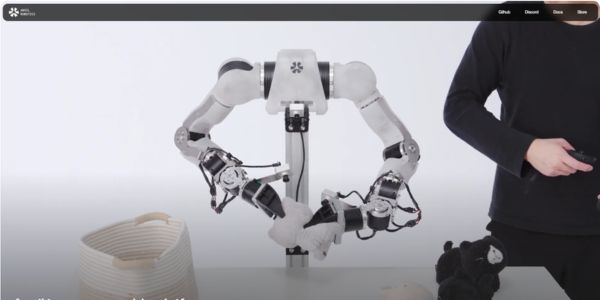
Anvil Robotics is building a physical AI modular robotics platform that replaces fragmented, bespoke stacks with composable hardware, software, and data tools. Founders, integrators, and investors should understand how this infrastructure shift could accelerate deployments in humanoids, logistics, and industrial automation.
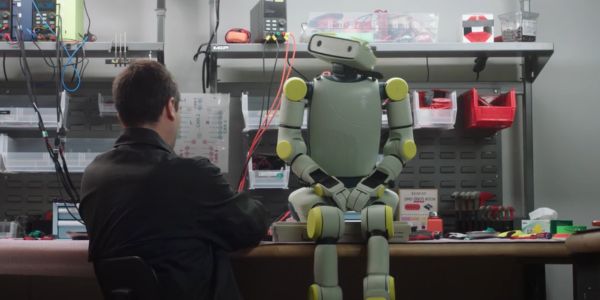
Amazon’s acquisition of Fauna Robotics brings the Sprout humanoid development platform into its Personal Robotics Group, highlighting a safety-first, developer-led approach to personal robots. The deal offers clues about how Amazon and other large buyers will evaluate humanoid platforms, from real-world deployments to exit opportunities for startups.
Mind Robotics has raised a $500 million Series A to build an AI-driven industrial automation platform trained on Rivian’s production lines. The Rivian spinout is targeting dexterous, variable factory tasks that traditional robots still struggle to automate, with a full-stack approach spanning models, hardware, and deployment infrastructure.
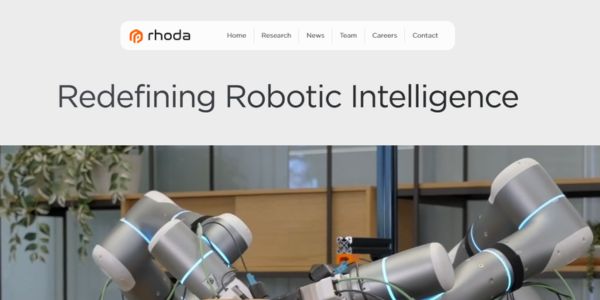
Rhoda AI has raised $450 million at a $1.7 billion valuation to launch FutureVision, a video-trained robot intelligence platform aimed at high-variability manufacturing and logistics. The feature examines the company’s Direct Video Action model, business model, and deployment challenges for founders, operators, and investors.
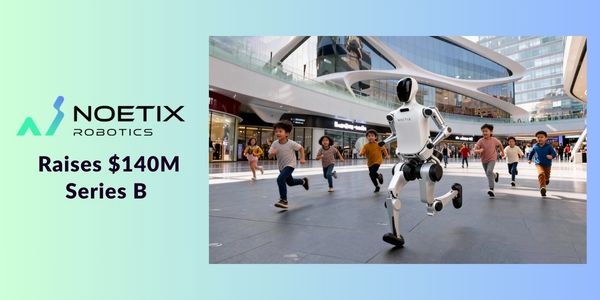
Noetix Robotics, a Beijing-based humanoid robotics startup, has closed a near-$140M Series B round to ramp up mass production and push its consumer-focused robots into everyday life.
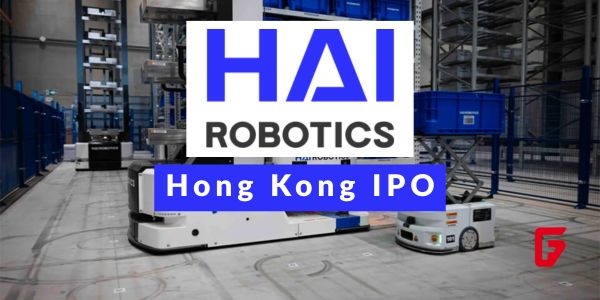
Shenzhen’s Hai Robotics, pioneer in ACR warehouse robots, files for HK IPO after raising over $500M in funding rounds led by top VCs.

Ouster’s $35M StereoLabs acquisition fuses lidar and ZED cameras into end-to-end Physical AI sensing. Founders Cecile Schmollgruber and team drive robotics revolution.
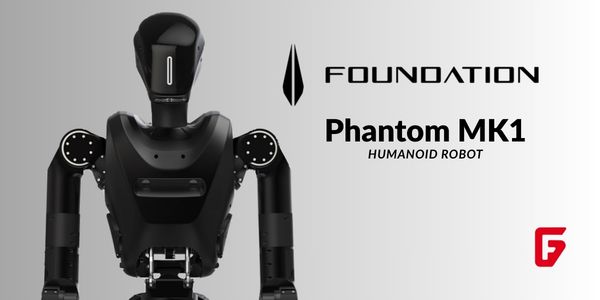
Foundation’s Phantom MK1 humanoid robot hits factories and eyes military use. Check specs, pilots, and bold 50k goal by 2027. Game-changer alert!
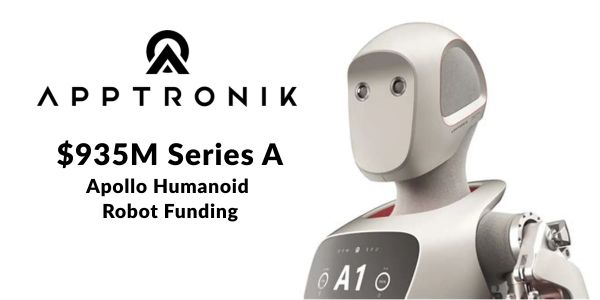
Humanoid robotics leader Apptronik just closed a massive $935M Series A, hitting a $5B valuation. Funds will boost Apollo production for factories and warehouses. Discover the investors and future plans.
Exciting news: Bedrock Robotics just scored $270M in Series B to power up autonomous machines on job sites. Led by ex-Waymo pros, they’re tackling construction labor shortages head-on.
futureTEKnow is focused on identifying and promoting creators, disruptors and innovators, and serving as a vital resource for those interested in the latest advancements in technology.
© 2026 All Rights Reserved.