






























San Francisco, California, USA
2023
Manufacturing, Industrial Automation, Electronics, Robotics, Precision Assembly
Devol Robots is a robotics company developing physical AI systems for robotic manipulation. Its technology is designed to help robots understand and respond to physical interactions rather than simply execute predetermined motion sequences. The company combines artificial intelligence, robot control, vision and interaction modeling to develop systems that can adapt when objects, positions or contact conditions change. Devol Robots is particularly focused on manufacturing applications where robots must perform precise manipulation tasks involving insertion, assembly, pick-and-place and physical contact.
Devol Robots develops AI technology that allows robotic systems to adapt to physical tasks with less reliance on manually programmed behavior. Its demonstrations include plug insertion, hearing-aid assembly, DIN rail assembly, pick-and-place operations, force-controlled pin assembly and snap-fit assembly.
The company is focused on situations where conventional industrial automation can struggle with variation, alignment and contact. Its approach uses a world-model architecture to help robots interpret what is happening during a task and adjust their actions accordingly. Devol has also demonstrated robotic manipulation across different objects and environments, including manufacturing-oriented applications.
Devol Robots’ technology centers on physical AI, embodied AI and world models for robotic manipulation. Rather than treating robotics as a sequence of fixed movements, the company is developing models that incorporate information about physical interaction, including contact, motion and force.
Its Interaction World Model (IWM) 1.0 uses a geometry-based approach to robot data and is designed to learn physical interaction patterns from robot trajectories. According to the company’s published research, IWM 1.0 was evaluated on contact-rich manipulation tasks including sub-millimeter socket plugging, lens insertion, Ethernet latching and DIN rail assembly. The company reported an average 92% success rate across its benchmark, with 90% on four contact-rich tasks. These figures are company-reported benchmark results rather than an independent assessment.
Devol’s approach also incorporates vision and robot control. The company has described its systems as combining vision, control and action models so robots can respond to variation and physical contact. Its demonstrations show this technology operating with robotic arms for manipulation and assembly tasks.
Devol Robots is relevant to the emerging physical AI category because it focuses on one of the difficult parts of industrial robotics: manipulating physical objects when conditions are not perfectly repeatable. Tasks involving insertion, alignment, assembly and contact can require robots to respond to forces and small variations rather than simply repeat a predefined trajectory.
The company’s work represents a shift toward robotic systems that use learned models of physical interaction alongside traditional robot-control techniques. This connects Devol Robots to a broader movement toward embodied AI, where AI systems interact with and learn from the physical world. Its manufacturing demonstrations provide concrete examples of how this approach can be applied to industrial manipulation.
Interaction World Model (IWM) 1.0 is Devol Robots’ published world-model technology for contact-rich robotic manipulation. The model is designed to preserve the geometric structure of physical robot signals and learn interaction behavior from robot motion. Devol has reported results across tasks such as socket plugging, lens insertion, Ethernet latching and DIN rail assembly.
Machine AI is Devol Robots’ term for its approach to robots that learn from physical interaction rather than simply replaying demonstrations. The company has demonstrated a workflow in which a robot observes a task, interacts with the environment, experiences contact and adapts its behavior to variations in the task. Devol describes this as an intelligence layer for physical work that can operate across different robotic embodiments.
Devol’s technology is demonstrated on robotic arms performing tasks such as pick-and-place, plug insertion, pin assembly and snap-fit assembly. The company has also worked with adaptive robotic arms, including Flexiv platforms, to demonstrate its world-model approach in physical manipulation.
Devol Robots’ technology is primarily demonstrated in manufacturing and industrial automation, particularly tasks requiring precise robotic manipulation. Current demonstrations include plug insertion, hearing-aid assembly, DIN rail assembly, pick-and-place, pin assembly and snap-fit assembly.
These applications involve situations where a robot must position, grasp, insert or assemble physical components while responding to differences in orientation, contact and alignment. The company’s technology is therefore relevant to production environments involving precision assembly, parts handling and other manipulation-heavy workflows. Devol has also described its technology as applicable across different robotic platforms rather than being tied to a single robot form factor.
Devol Robots’ Interaction World Model is an AI architecture designed for robotic manipulation that models physical interaction and robot motion. IWM 1.0 is the company’s published version of this approach and has been evaluated on contact-rich manipulation tasks.
Devol Robots demonstrates tasks including plug insertion, hearing-aid assembly, DIN rail assembly, pick-and-place, force-controlled pin assembly and snap-fit assembly.
Devol uses physical AI to help robots respond to real-world interaction and variation. Its approach incorporates vision, robot control and models of physical interaction so robotic systems can adjust their behavior rather than relying exclusively on fixed scripts.
Machine AI is Devol Robots’ description for systems that learn from interaction with the physical environment. The company has demonstrated robots learning from a human demonstration and subsequently adapting through their own interaction with a task.
Devol Robots’ current work is closely associated with manufacturing and industrial automation, particularly precision manipulation and assembly. Its demonstrations include manufacturing-oriented tasks such as component insertion, assembly and pick-and-place.
Have an update, correction, or additional information about this company? Help us keep the futureTEKnow company database up to date by submitting the latest company information.

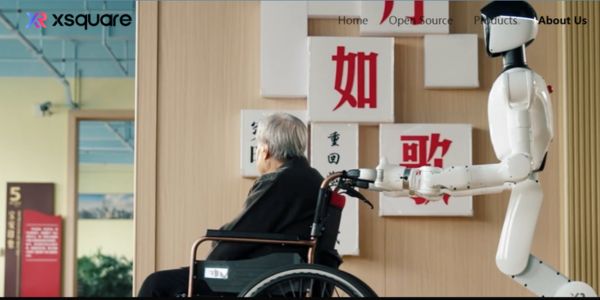
X Square Robot has raised $276M from Xiaomi, Sequoia China, and other internet giants to scale its WALL-A embodied AI model and wheeled humanoid robots from household cleaning into factories, logistics, and eldercare, reshaping how physical work is automated in China.
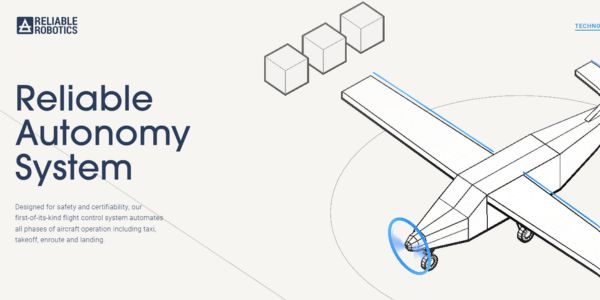
Reliable Robotics has secured $160M to scale production and deployment of its Reliable Autonomy System. This funding marks a pivotal transition for the company as it prepares for commercial cargo operations and works toward final FAA certification.
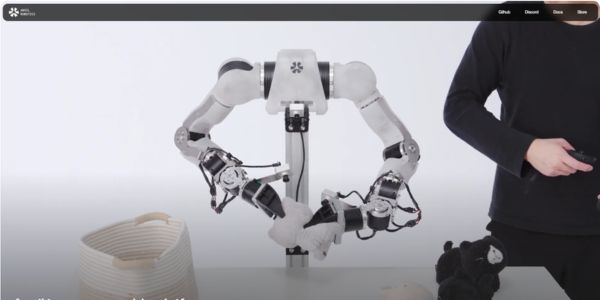
Anvil Robotics is building a physical AI modular robotics platform that replaces fragmented, bespoke stacks with composable hardware, software, and data tools. Founders, integrators, and investors should understand how this infrastructure shift could accelerate deployments in humanoids, logistics, and industrial automation.
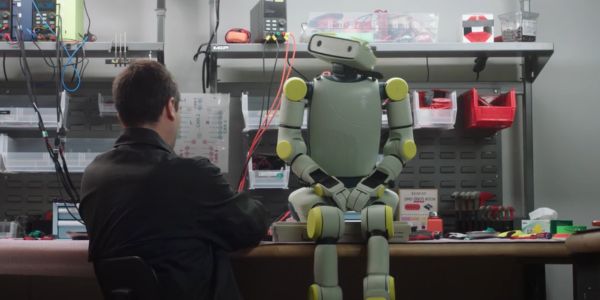
Amazon’s acquisition of Fauna Robotics brings the Sprout humanoid development platform into its Personal Robotics Group, highlighting a safety-first, developer-led approach to personal robots. The deal offers clues about how Amazon and other large buyers will evaluate humanoid platforms, from real-world deployments to exit opportunities for startups.
Mind Robotics has raised a $500 million Series A to build an AI-driven industrial automation platform trained on Rivian’s production lines. The Rivian spinout is targeting dexterous, variable factory tasks that traditional robots still struggle to automate, with a full-stack approach spanning models, hardware, and deployment infrastructure.
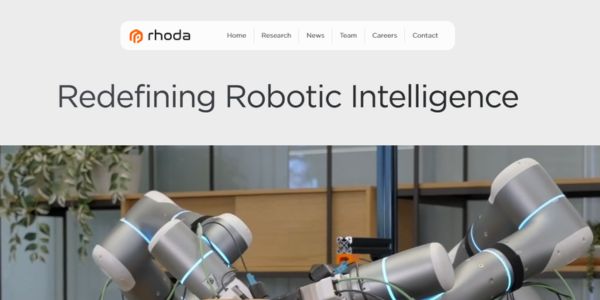
Rhoda AI has raised $450 million at a $1.7 billion valuation to launch FutureVision, a video-trained robot intelligence platform aimed at high-variability manufacturing and logistics. The feature examines the company’s Direct Video Action model, business model, and deployment challenges for founders, operators, and investors.
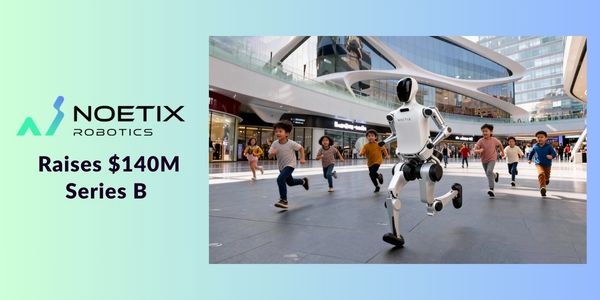
Noetix Robotics, a Beijing-based humanoid robotics startup, has closed a near-$140M Series B round to ramp up mass production and push its consumer-focused robots into everyday life.
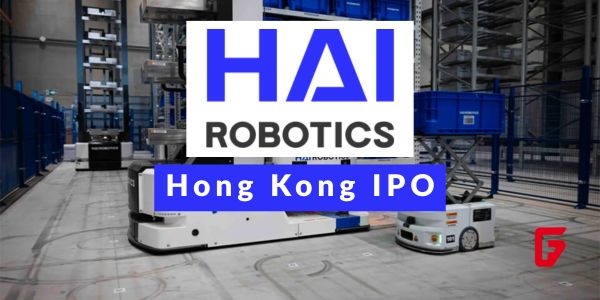
Shenzhen’s Hai Robotics, pioneer in ACR warehouse robots, files for HK IPO after raising over $500M in funding rounds led by top VCs.

Ouster’s $35M StereoLabs acquisition fuses lidar and ZED cameras into end-to-end Physical AI sensing. Founders Cecile Schmollgruber and team drive robotics revolution.
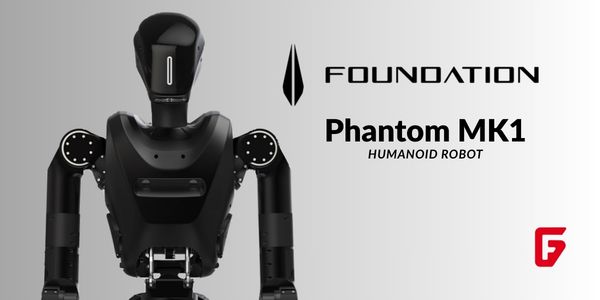
Foundation’s Phantom MK1 humanoid robot hits factories and eyes military use. Check specs, pilots, and bold 50k goal by 2027. Game-changer alert!
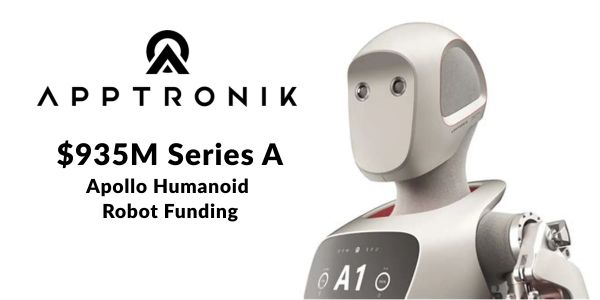
Humanoid robotics leader Apptronik just closed a massive $935M Series A, hitting a $5B valuation. Funds will boost Apollo production for factories and warehouses. Discover the investors and future plans.
Exciting news: Bedrock Robotics just scored $270M in Series B to power up autonomous machines on job sites. Led by ex-Waymo pros, they’re tackling construction labor shortages head-on.
futureTEKnow is focused on identifying and promoting creators, disruptors and innovators, and serving as a vital resource for those interested in the latest advancements in technology.
© 2026 All Rights Reserved.