






























Pescadero, California, USA
2019
Agricultural Technology, Controlled Environment Agriculture, Greenhouse Farming, Food Production, Sustainable Agriculture
Hippo Harvest is an agricultural technology company that uses robotics, machine learning, and controlled-environment agriculture to produce organic leafy greens in greenhouses. Its growing system combines autonomous mobile robots with precision irrigation, nutrient delivery, and software-driven crop management.
The company develops greenhouse farming methods designed to reduce water, fertilizer, and land consumption while maintaining year-round production. Hippo Harvest also sells packaged organic greens, including spinach, arugula, lettuce, and salad blends, through grocery retailers.
Hippo Harvest operates technology-enabled greenhouses that grow leafy vegetables using autonomous robots and automated resource management. Its autonomous mobile robots move growing modules within greenhouse environments, adjusting plant spacing as crops develop to improve the use of available growing space.
The company’s farming system combines robotic crop handling with machine learning and direct-to-root irrigation. Water and nutrients are delivered according to plant growth requirements, helping reduce unnecessary resource consumption.
Hippo Harvest produces USDA-certified organic greens for retail distribution. Its product assortment includes greenhouse-grown vegetables alongside organic field-grown greens, providing retailers with a broader selection and more consistent supply across different growing seasons.
Hippo Harvest develops a robotics-enabled greenhouse growing system that integrates autonomous mobile robots, machine learning, agricultural sensors, and precision irrigation. Its technology is designed to automate repetitive crop management activities while optimizing how plants use space, water, and nutrients.
The company’s autonomous mobile robots function as indoor agricultural tractors. They move growing modules through greenhouse environments and automatically adjust plant spacing during the growing cycle. As plants increase in size, the robotic system redistributes modules to make more efficient use of the greenhouse floor.
Hippo Harvest also uses a closed-loop, direct-to-root watering and nutrient delivery system. This approach supplies plants with controlled amounts of water and fertilizer according to their growth requirements. Machine learning supports the monitoring and optimization of greenhouse operations.
According to company-reported comparisons with conventional agriculture, its growing methods use approximately 92% less water, 55% less fertilizer, and 94% less land. The company is developing a next-generation robotic growing system intended to increase production throughput, improve growing density, and reduce operating costs as greenhouse capacity expands.
Traditional leafy green production depends on agricultural land, seasonal growing conditions, irrigation, and labor-intensive crop management. Greenhouse farming can reduce exposure to weather variability, but the costs of facilities and operations can make indoor production more expensive than field agriculture.
Hippo Harvest addresses this challenge through autonomous agricultural robotics and resource-efficient greenhouse design. Its robotic growing system reduces the need for manual movement of growing modules while allowing plants to occupy space more efficiently throughout their growth cycles.
The company’s approach illustrates how robotics and machine learning can be integrated into commercial food production, connecting automated crop handling with irrigation management and retail distribution. Its planned expansion also provides an opportunity to evaluate how robotic greenhouse systems perform at a larger commercial scale.
Hippo Harvest develops a robotic greenhouse growing system that uses autonomous mobile robots to move and reposition plant-growing modules. The robots function as indoor agricultural tractors, automatically adjusting plant spacing throughout the growth cycle to improve growing density and production efficiency.
The company’s closed-loop, direct-to-root irrigation system delivers water and nutrients according to plant growth requirements. It combines controlled nutrient delivery with greenhouse crop management to reduce resource consumption compared with conventional agricultural production.
Hippo Harvest integrates machine learning into its greenhouse operations to support crop monitoring, growing-condition analysis, and operational optimization. Its software works alongside agricultural sensors and robotic equipment to improve the management of controlled growing environments.
Hippo Harvest markets a selection of organic leafy greens, including spinach, arugula, spring mix, butter lettuce, crispy leaf lettuce, a 50/50 spinach and spring mix blend, baby kale, and baby romaine. Its retail assortment combines greenhouse-grown and organic field-grown produce to support product availability throughout the year.
Autonomous Greenhouse Farming: Using mobile robots to reposition growing modules and automate repetitive crop management activities inside greenhouses.
Controlled-Environment Agriculture: Growing leafy vegetables in managed greenhouse environments with reduced exposure to seasonal weather conditions.
Precision Irrigation: Delivering controlled amounts of water and nutrients directly to plant roots throughout the growing cycle.
Agricultural Resource Optimization: Using machine learning and automated growing systems to improve the use of greenhouse space, fertilizer, and water.
Commercial Leafy Green Production: Producing organic spinach, lettuce, arugula, kale, and packaged salad blends for grocery retailers.
Greenhouse Automation: Integrating autonomous mobile robots, agricultural sensors, and software to support repeatable crop management operations.
Hippo Harvest is an agricultural technology company that uses robotics, machine learning, and controlled-environment agriculture to produce organic leafy greens in automated greenhouses.
Hippo Harvest uses autonomous mobile robots that function as indoor agricultural tractors. These robots move and reposition growing modules to improve space utilization as plants develop.
The company combines autonomous mobile robots, machine learning, agricultural sensors, and a closed-loop irrigation system that delivers water and nutrients directly to plant roots.
Hippo Harvest reports using approximately 92% less water, 55% less fertilizer, and 94% less land compared with conventional agricultural production. These figures are company-reported comparisons.
Hippo Harvest produces organic leafy greens, including spinach, arugula, butter lettuce, and other lettuce varieties. Its retail product assortment also includes spring mix, baby kale, baby romaine, and salad blends.
Yes. In July 2026, Hippo Harvest announced a $30 million Series C financing round to support a planned 30-acre greenhouse expansion in Hollister, California, and development of its next-generation robotic growing system. The expansion was subject to permitting at the time of the announcement.
Hippo Harvest is headquartered in Pescadero, California, United States.
Have an update, correction, or additional information about this company? Help us keep the futureTEKnow company database up to date by submitting the latest company information.

X Square Robot has raised $276M from Xiaomi, Sequoia China, and other internet giants to scale its WALL-A embodied AI model and wheeled humanoid robots from household cleaning into factories, logistics, and eldercare, reshaping how physical work is automated in China.
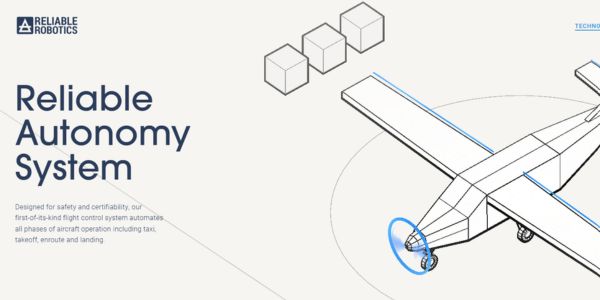
Reliable Robotics has secured $160M to scale production and deployment of its Reliable Autonomy System. This funding marks a pivotal transition for the company as it prepares for commercial cargo operations and works toward final FAA certification.

Anvil Robotics is building a physical AI modular robotics platform that replaces fragmented, bespoke stacks with composable hardware, software, and data tools. Founders, integrators, and investors should understand how this infrastructure shift could accelerate deployments in humanoids, logistics, and industrial automation.

Amazon’s acquisition of Fauna Robotics brings the Sprout humanoid development platform into its Personal Robotics Group, highlighting a safety-first, developer-led approach to personal robots. The deal offers clues about how Amazon and other large buyers will evaluate humanoid platforms, from real-world deployments to exit opportunities for startups.
Mind Robotics has raised a $500 million Series A to build an AI-driven industrial automation platform trained on Rivian’s production lines. The Rivian spinout is targeting dexterous, variable factory tasks that traditional robots still struggle to automate, with a full-stack approach spanning models, hardware, and deployment infrastructure.

Rhoda AI has raised $450 million at a $1.7 billion valuation to launch FutureVision, a video-trained robot intelligence platform aimed at high-variability manufacturing and logistics. The feature examines the company’s Direct Video Action model, business model, and deployment challenges for founders, operators, and investors.
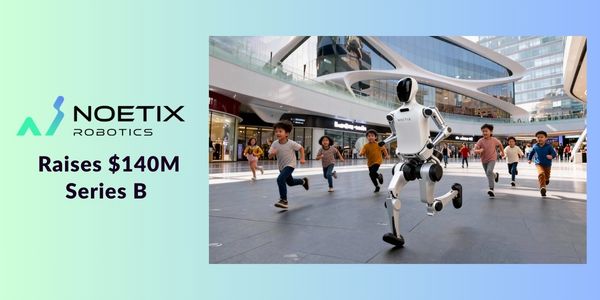
Noetix Robotics, a Beijing-based humanoid robotics startup, has closed a near-$140M Series B round to ramp up mass production and push its consumer-focused robots into everyday life.
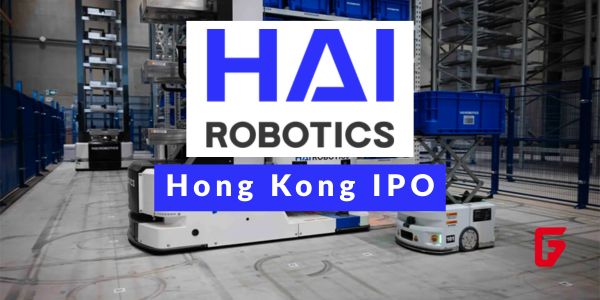
Shenzhen’s Hai Robotics, pioneer in ACR warehouse robots, files for HK IPO after raising over $500M in funding rounds led by top VCs.
Ouster’s $35M StereoLabs acquisition fuses lidar and ZED cameras into end-to-end Physical AI sensing. Founders Cecile Schmollgruber and team drive robotics revolution.
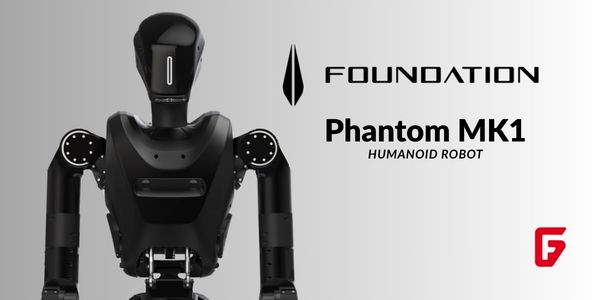
Foundation’s Phantom MK1 humanoid robot hits factories and eyes military use. Check specs, pilots, and bold 50k goal by 2027. Game-changer alert!
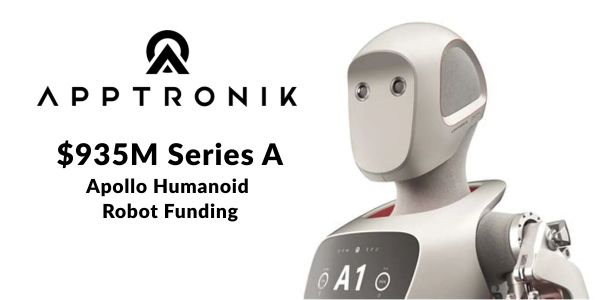
Humanoid robotics leader Apptronik just closed a massive $935M Series A, hitting a $5B valuation. Funds will boost Apollo production for factories and warehouses. Discover the investors and future plans.
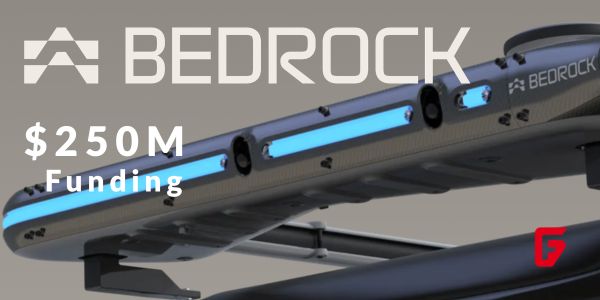
Exciting news: Bedrock Robotics just scored $270M in Series B to power up autonomous machines on job sites. Led by ex-Waymo pros, they’re tackling construction labor shortages head-on.
futureTEKnow is focused on identifying and promoting creators, disruptors and innovators, and serving as a vital resource for those interested in the latest advancements in technology.
© 2026 All Rights Reserved.