



























Menlo

Learn about Menlo Research, a robotics company developing open-source humanoid robots, AI agents, and simulation tools for robotics development.

Headquarters

Singapore

Year Founded

2023

Website

Sector

Industries

Humanoid Robotics, Artificial Intelligence, Robotics Research, Developer Tools, Robotics Software, Industrial Automation

What Is Menlo Research?

Menlo Research is a robotics and artificial intelligence company developing open-design humanoid robots and software for physical AI. Its work combines robotic hardware, motion control, simulation, and AI agents to help developers build and test autonomous machines.

The company’s principal robotics platform is Asimov, a humanoid designed for assembly, repair, and customization using publicly available engineering documentation. Menlo also develops robot training and simulation tools that allow software developers to experiment with robot behavior before transferring control policies to physical hardware.

What Does Menlo Research Do?

Menlo Research designs humanoid robots and develops the software infrastructure needed to program, train, simulate, and operate them. Its Asimov 1 platform provides a physical robot with an accompanying software development kit, engineering files, and simulation configurations.

The company uses digital twins and robot learning systems to test movement and task execution in virtual environments. Developers can evaluate locomotion and autonomous behavior before deploying the resulting software to a physical robot.

Menlo is also developing an AI agent deployment platform intended to connect high-level task instructions with robotic actions. Its broader research includes motion-control training pipelines, simulation environments, data collection systems, and cloud infrastructure for robotics development.

Beyond humanoid robotics, the company developed Jan, an open-source AI agent for desktop computers. Its robotics work builds on this software background by exploring how AI agents can interact with physical environments.

Join Our Newsletter

* indicates required

Intuit Mailchimp

ADVERTISEMENT
eMerge Americas 2027 Conference
ADVERTISEMENT
Submit Your Company | futureTEKnow

Menlo Research Technology

Menlo Research combines open humanoid hardware, robotics simulation, and AI-based control software in a development architecture intended to reduce the engineering effort required to deploy autonomous robots.

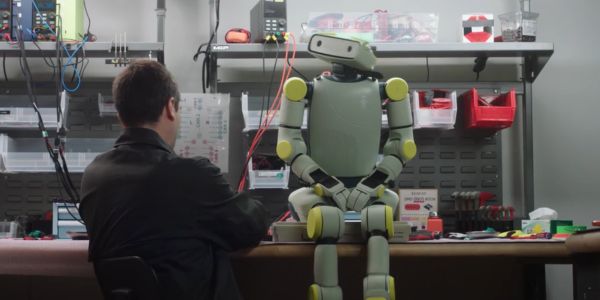
Its Asimov 1 humanoid stands approximately 1.2 meters tall and weighs 35 kilograms. The robot uses bipedal legs, electric actuators, and onboard computing based on Raspberry Pi 5 and Radxa CM5 hardware. Menlo publishes CAD models, bill-of-materials information, assembly documentation, and software configurations so developers can inspect and modify the platform.

The company’s simulation-to-reality training approach uses a digital representation of the robot to test control policies before they are deployed to physical hardware. Simulation enables repeated experiments with locomotion, movement planning, and task execution without exposing a physical robot to every early-stage failure.

Menlo identifies Uranus as its world simulation environment and Cyclotron as its motor-control training pipeline. Its research architecture incorporates dynamics randomization and other training methods intended to improve the transfer of behaviors from simulated environments to real robots.

The company is also developing an agent platform that connects AI task instructions with robot control. Its proposed architecture includes deployment controls, versioning, rollback mechanisms, and operational constraints designed to help manage autonomous behavior.

Additional development components include a data engine for collecting real-world feedback, Menlo Cloud for robotics computing workloads, and Tokamak, an internal software development system. These components represent the company’s broader engineering stack and should not all be treated as separately available commercial products.

Why Menlo Research Matters

Humanoid robotics development often depends on specialized hardware, proprietary software, and engineering teams with expertise in mechanical design, electronics, control systems, and machine learning.

Menlo Research is addressing these barriers through repairable humanoid hardware and publicly available engineering designs. Developers can examine the robot’s components, modify its construction, and experiment with different software approaches.

Its simulation tools also provide a way to test robot behavior before physical deployment, potentially reducing development costs and hardware damage during early experiments.

The company’s longer-term work focuses on connecting general-purpose AI agents with physical robotic systems, an important challenge for making humanoids useful beyond predefined demonstrations.

Menlo represents an open-development approach to humanoid robotics, although broad commercial deployment and the reliability of its planned autonomous task-execution systems remain to be established.

Menlo Research Products & Platforms

Asimov 1

Asimov 1 is an open-design bipedal humanoid robot for research, software development, and robotics demonstrations. Standing approximately 1.2 meters tall and weighing 35 kilograms, it includes electric actuators, onboard computing, a software development kit, and simulation configurations. The robot is available as a DIY kit, with published engineering documentation that supports assembly, repair, modification, and experimental control policies.

Digital Asimov

Digital Asimov is a browser-based humanoid simulation environment that allows developers to test robot behavior without physical hardware. Users can experiment with task instructions, movement sequences, and AI agents in simulated environments such as warehouses and apartments. The platform provides a virtual representation of Asimov for robotics development and early-stage experimentation.

Asimov 2

Asimov 2 is the company’s next-generation humanoid robotics project. Menlo identifies the platform as in development, with further engineering work expected to build on Asimov 1 and its associated AI software. Final hardware specifications, production availability, and independently demonstrated capabilities have not been established.

Menlo Agent Platform

Menlo is developing an agent platform designed to connect AI-generated task instructions with robotic control systems. Its proposed architecture includes deployment management, permissions, operational constraints, versioning, and rollback capabilities. The platform is intended to help developers move from high-level instructions to physical robot actions while retaining controls over deployment and behavior.

Uranus and Cyclotron

Uranus is Menlo’s named world simulation environment, while Cyclotron is its motor-control training pipeline. Together, these development technologies support simulation-based robot training and transfer of learned behaviors to physical hardware. Menlo describes techniques including dynamics randomization to improve the robustness of control policies. These components are part of its research and engineering stack rather than independently established commercial products.

Jan AI Agent

Jan is an open-source AI agent application for desktop computers. It supports local and cloud-hosted language models and provides a customizable environment for working with AI assistants. Jan predates Menlo’s Asimov robotics program and represents the company’s software development background. It is a separate AI product rather than a humanoid robot control system.

Menlo Research Applications

Humanoid Robotics Research: Providing an accessible physical platform for studying locomotion, control systems, and embodied AI.

Robot Learning: Training and evaluating movement policies using simulated environments and physical robot feedback.

AI Agent Integration: Investigating how language-model-based agents can issue instructions to robotic systems.

Robotics Education: Supporting practical learning in mechanical assembly, electronics, control systems, and robot programming.

Simulation-Based Testing: Evaluating robotic movements and task execution in digital environments before physical deployment.

Industrial Automation Research: Exploring humanoid systems for material handling, movement, and other physical workplace tasks.

Open Hardware Development: Allowing researchers to modify mechanical components, actuators, and software configurations.

Robotics Prototyping: Providing a reusable humanoid platform for experimenting with new AI models and control methods.

Latest Companies

ADVERTISEMENT
eMerge Americas 2027 Conference

Frequently Asked Questions

What is Menlo Research?

Menlo Research is a robotics and AI company developing open-design humanoid robots, simulation tools, and software for training and deploying autonomous robotic behavior.

When was Menlo Research founded?

Menlo Research was founded in 2023 and is headquartered in Singapore. It operates additional engineering and research offices in Palo Alto and Ho Chi Minh City.

What is the Asimov humanoid robot?

Asimov is Menlo’s open-design humanoid robotics platform. Its first model, Asimov 1, is a bipedal robot developed for assembly, modification, AI research, and software experimentation.

How much does Asimov 1 cost?

Menlo lists the Asimov 1 DIY kit at $20,000, with a $499 reservation deposit. Final pricing may vary by destination and shipping requirements.

Is Asimov open source?

Menlo publishes engineering documentation, CAD files, software configurations, and other development resources for Asimov. These materials support independent assembly, modification, repair, and software development.

Can developers simulate Asimov without buying a robot?

Yes. Digital Asimov provides a browser-based simulation environment where developers can experiment with robot behavior and AI-driven tasks without requiring physical humanoid hardware.

What is the difference between Menlo Research and Jan AI?

Menlo Research is the company developing Asimov and its robotics software infrastructure. Jan is a separate open-source AI agent application developed by the same organization.

Related Companies

Unitree Robotics

Light Origins

Foxglove

Do You Have an Update for This Company?

Have an update, correction, or additional information about this company? Help us keep the futureTEKnow company database up to date by submitting the latest company information.

Update Company Information

Latest Articles

Amazon Fauna Robotics acquisition brings the Sprout humanoid platform into its Personal Robotics Group, signaling a safety-first, developer-led approach to personal robots.

Amazon’s Fauna Robotics acquisition signals next phase for humanoid robots

Amazon’s acquisition of Fauna Robotics brings the Sprout humanoid development platform into its Personal Robotics Group, highlighting a safety-first, developer-led approach to personal robots. The deal offers clues about how Amazon and other large buyers will evaluate humanoid platforms, from real-world deployments to exit opportunities for startups.
Mind Robotics’ $500M Series A backs an AI-driven industrial automation platform using Rivian production data to tackle dexterous factory work.

Mind Robotics’ $500M Series A backs AI-driven industrial automation shift

Mind Robotics has raised a $500 million Series A to build an AI-driven industrial automation platform trained on Rivian’s production lines. The Rivian spinout is targeting dexterous, variable factory tasks that traditional robots still struggle to automate, with a full-stack approach spanning models, hardware, and deployment infrastructure.
futureTEKnow is focused on identifying and promoting creators, disruptors and innovators, and serving as a vital resource for those interested in the latest advancements in technology.

© 2026 All Rights Reserved.