






























Guangdong, China
2024
Humanoid Robotics, Artificial Intelligence Research, Embodied AI, Robotics Software, Machine Learning, Autonomous Systems
Light Origins is an artificial intelligence and robotics company developing foundation models for physical AI and embodied intelligence. Its research focuses on enabling robots to understand their surroundings, learn physical behaviors, and adapt their movements across different environments and robotic platforms.
The company combines large-scale AI training, multimodal perception, reinforcement learning, and robotic hardware development. Its work includes humanoid locomotion, whole-body control, autonomous navigation, and learning from human actions, with experimental robotic platforms used to evaluate model performance in physical environments.
Light Origins researches and develops artificial intelligence models that allow robots to perform physical actions beyond narrowly programmed movements. Its systems learn from human behavior, simulation environments, and robot interaction data to develop transferable movement and navigation capabilities.
The company develops robotic foundation models that connect visual information, language instructions, and physical actions. Its research includes whole-body motion generation, autonomous navigation, fall recovery, and adaptation to changes in a robot’s physical capabilities.
Light Origins also builds experimental humanoid hardware to evaluate its algorithms outside simulation. Its Lightbot 0 platform has been used to demonstrate learned locomotion and parkour behaviors, while other research models explore navigation across humanoid, quadruped, wheeled, and aerial robotic systems.
Light Origins develops embodied foundation models using large-scale pretraining, reinforcement learning, simulation, and real-world robotic feedback. Its research connects language understanding and visual perception with motor control, allowing AI systems to generate physical actions rather than only digital responses.
Its Light-O1 research uses human-action pretraining to learn transferable movement patterns from video data. The approach connects language, vision, and whole-body action representations, providing a foundation for adapting learned behaviors to different robotic embodiments.
LightNav-0 addresses autonomous navigation through a Real2Sim2Real training process. The company converts real-world scenes into simulation environments, generates navigation experience, and uses supervised learning and reinforcement learning to train a general-purpose navigation model. The reported training pipeline uses more than 2,000 real-world scenes to produce over 4,000 hours of simulated navigation experience.
Light REACT focuses on resilient humanoid control. Its Transformer-based architecture uses recent physical interaction history to infer environmental disturbances and hardware limitations. The model learns alternative movement strategies, including recovery from falls, modified walking patterns, and crawling when normal locomotion becomes impractical.
The company’s LightParkour research combines physics-based simulation, human motion demonstrations, and reinforcement learning to train contact-rich humanoid movement. These behaviors have been demonstrated on Lightbot 0, a compact humanoid research platform using onboard perception and control.
Many robots remain dependent on specialized software developed for particular machines, environments, and tasks. A robot trained to navigate one setting may require substantial additional training before operating effectively in another.
Light Origins is researching generalizable physical intelligence that can transfer learned behaviors across different robotic platforms. Its approach combines human-action data, simulation-based training, and real-world feedback to reduce dependence on individually programmed behaviors.
Its work on resilient locomotion also addresses an important challenge for humanoid deployment: maintaining useful movement when robots encounter unexpected obstacles, falls, or mechanical limitations.
The company illustrates how foundation model research is expanding into physical robotics, connecting advances in AI training with the practical requirements of autonomous machines. Its commercial significance will depend on demonstrating reliable performance across diverse real-world environments and applications.
Light-O1 is an embodied AI research model that learns transferable whole-body movement representations from human-action video data. It connects language, visual perception, and physical actions to support humanoid locomotion, manipulation, and movement generation from natural-language instructions.
Light REACT is a resilient whole-body control system for humanoid robots. It uses Transformer-based in-context learning to adapt movement after falls, external disturbances, and simulated hardware failures. Its training combines reinforcement learning, specialized teacher models, distillation, and preference alignment to develop alternative locomotion strategies.
LightNav-0 is a general-purpose robotic navigation model designed to transfer navigation capabilities across different robot types and environments. Its Real2Sim2Real training system converts real-world scenes into simulated environments and generates large-scale navigation experience. The company has demonstrated zero-shot navigation transfer across humanoid, quadruped, wheeled, and aerial robot configurations.
LightParkour is a research system for contact-rich humanoid locomotion. It combines human motion demonstrations, physics-based simulation, and reinforcement learning to train robots to negotiate obstacles and transition between movement behaviors. The system has been demonstrated on the Lightbot 0 humanoid research platform.
Lightbot 0 is an experimental humanoid robot developed to validate whole-body control and locomotion algorithms. The platform stands approximately 90 centimeters tall, weighs 18.9 kilograms, and has 21 actuated joints. It uses onboard depth perception and proprioceptive sensing, with a learned control policy operating at 50 Hz. The robot serves as a physical research platform rather than an established commercial humanoid product.
Humanoid Robot Learning: Training humanoid robots to develop transferable movement capabilities using human demonstrations, simulation, and reinforcement learning.
Autonomous Navigation: Developing navigation models capable of transferring learned behaviors across different robotic platforms and environments.
Whole-Body Motion Control: Coordinating robotic joints and body movements for locomotion, balance, obstacle traversal, and physical interaction.
Robot Recovery and Resilience: Enabling humanoid robots to recover from falls and adapt their movements to environmental constraints or hardware impairments.
Simulation-Based Robot Training: Generating simulated physical experiences from real-world environments to support large-scale reinforcement learning.
Vision-Language-Action Research: Connecting visual perception, natural-language instructions, and physical movement through embodied AI models.
General-Purpose Robotics Research: Investigating AI architectures that can transfer physical capabilities between humanoid, quadruped, wheeled, and other robotic systems.
Light Origins develops physical AI foundation models that help robots learn movement, navigation, and physical interaction capabilities from human-action data, simulation, and real-world feedback.
Light-O1 is an embodied AI research model that learns transferable whole-body movement patterns from human-action videos and connects language, vision, and physical actions.
LightNav-0 uses simulation-based training and reinforcement learning to develop navigation capabilities that can transfer across different robot types, including humanoid, quadruped, wheeled, and aerial platforms.
Yes. The company’s Light REACT research demonstrates whole-body control strategies that help humanoid robots recover from falls and adapt their movement to simulated mechanical impairments and environmental obstacles.
Lightbot 0 is a compact humanoid research robot used to test locomotion and whole-body movement algorithms. It stands approximately 90 centimeters tall and has 21 actuated joints.
Light Origins develops humanoid robotic hardware for research and model validation. Its website also previews a forthcoming bipedal humanoid, but general commercial availability has not been established.
Light Origins was founded in late 2024 and is based in Shenzhen, China.
Have an update, correction, or additional information about this company? Help us keep the futureTEKnow company database up to date by submitting the latest company information.

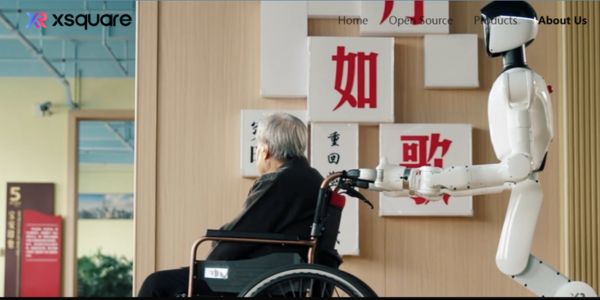
X Square Robot has raised $276M from Xiaomi, Sequoia China, and other internet giants to scale its WALL-A embodied AI model and wheeled humanoid robots from household cleaning into factories, logistics, and eldercare, reshaping how physical work is automated in China.
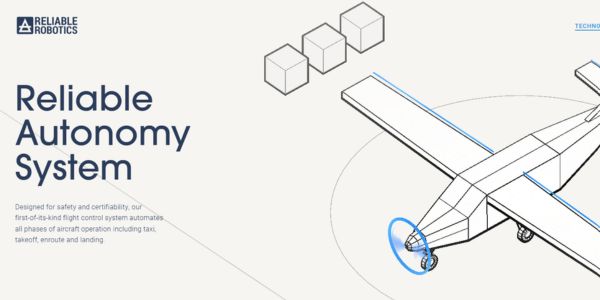
Reliable Robotics has secured $160M to scale production and deployment of its Reliable Autonomy System. This funding marks a pivotal transition for the company as it prepares for commercial cargo operations and works toward final FAA certification.
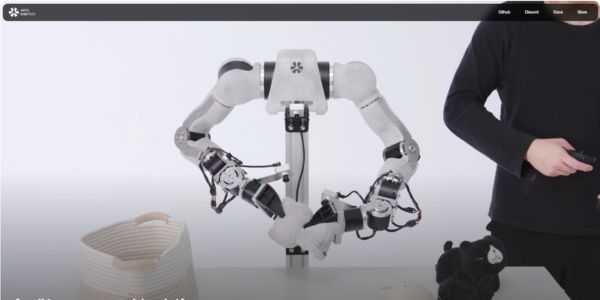
Anvil Robotics is building a physical AI modular robotics platform that replaces fragmented, bespoke stacks with composable hardware, software, and data tools. Founders, integrators, and investors should understand how this infrastructure shift could accelerate deployments in humanoids, logistics, and industrial automation.
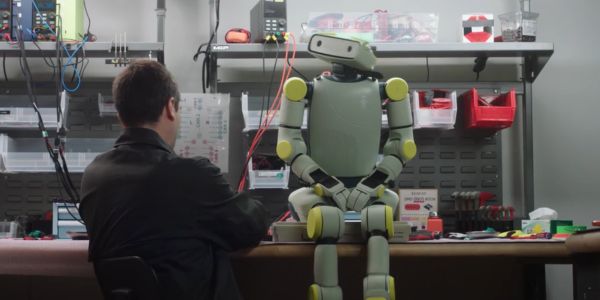
Amazon’s acquisition of Fauna Robotics brings the Sprout humanoid development platform into its Personal Robotics Group, highlighting a safety-first, developer-led approach to personal robots. The deal offers clues about how Amazon and other large buyers will evaluate humanoid platforms, from real-world deployments to exit opportunities for startups.
Mind Robotics has raised a $500 million Series A to build an AI-driven industrial automation platform trained on Rivian’s production lines. The Rivian spinout is targeting dexterous, variable factory tasks that traditional robots still struggle to automate, with a full-stack approach spanning models, hardware, and deployment infrastructure.
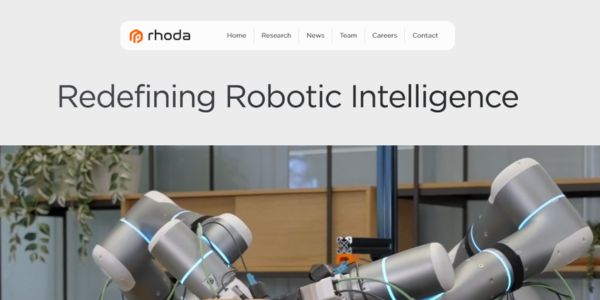
Rhoda AI has raised $450 million at a $1.7 billion valuation to launch FutureVision, a video-trained robot intelligence platform aimed at high-variability manufacturing and logistics. The feature examines the company’s Direct Video Action model, business model, and deployment challenges for founders, operators, and investors.
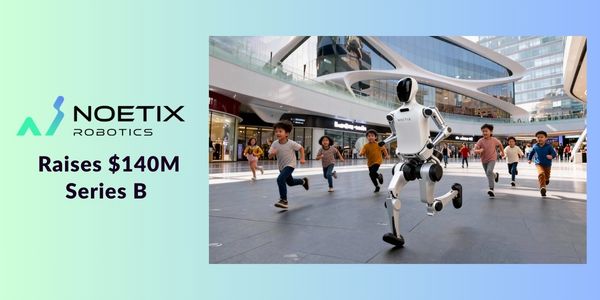
Noetix Robotics, a Beijing-based humanoid robotics startup, has closed a near-$140M Series B round to ramp up mass production and push its consumer-focused robots into everyday life.
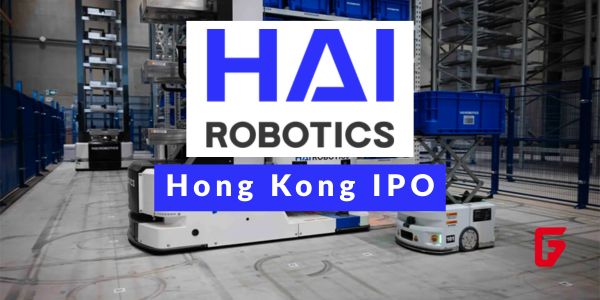
Shenzhen’s Hai Robotics, pioneer in ACR warehouse robots, files for HK IPO after raising over $500M in funding rounds led by top VCs.

Ouster’s $35M StereoLabs acquisition fuses lidar and ZED cameras into end-to-end Physical AI sensing. Founders Cecile Schmollgruber and team drive robotics revolution.
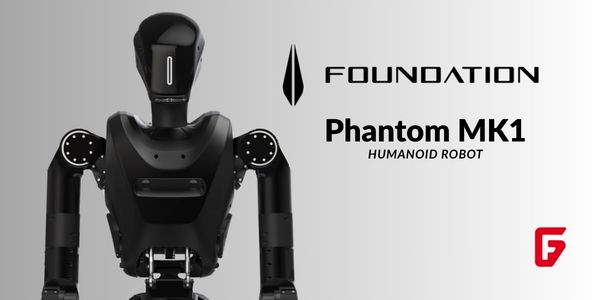
Foundation’s Phantom MK1 humanoid robot hits factories and eyes military use. Check specs, pilots, and bold 50k goal by 2027. Game-changer alert!
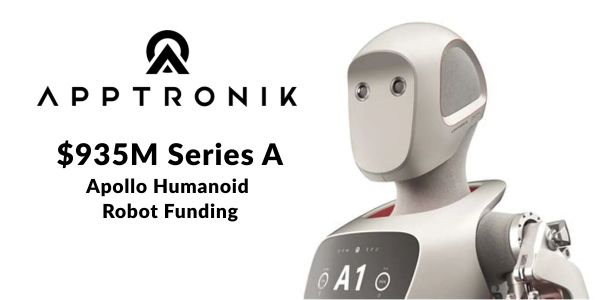
Humanoid robotics leader Apptronik just closed a massive $935M Series A, hitting a $5B valuation. Funds will boost Apollo production for factories and warehouses. Discover the investors and future plans.
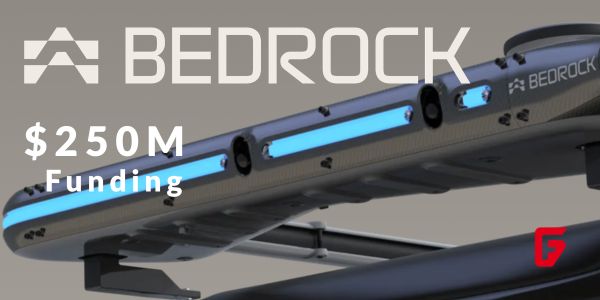
Exciting news: Bedrock Robotics just scored $270M in Series B to power up autonomous machines on job sites. Led by ex-Waymo pros, they’re tackling construction labor shortages head-on.
futureTEKnow is focused on identifying and promoting creators, disruptors and innovators, and serving as a vital resource for those interested in the latest advancements in technology.
© 2026 All Rights Reserved.