
































Menlo Park, California, USA
2017
Consumer Robotics, Smart Home Technology, Consumer Electronics, Home Appliances, Artificial Intelligence, Home Automation
Matic is a consumer robotics company developing AI-powered autonomous home cleaning robots that use computer vision to navigate and understand indoor environments. The company combines robotics hardware, machine learning, and visual perception to automate household floor cleaning. Its technology focuses on vision-based navigation and on-device artificial intelligence, allowing robots to recognize obstacles, identify floor surfaces, and make cleaning decisions without relying on cloud processing. Matic operates within the emerging field of intelligent home robotics, where autonomous machines perform everyday household tasks.
Matic designs and manufactures autonomous robotic vacuum and mop systems for residential environments. Its robots use cameras, neural networks, and real-time spatial mapping to understand household layouts, navigate around obstacles, and clean different floor surfaces.
The company’s primary product combines vacuuming and mopping in a single robotic platform. It can recognize carpets, rugs, and hard floors, adjust its cleaning behavior, and avoid common household obstacles such as cables, furniture, and toys.
Matic also develops AI-powered navigation and home mapping software that allows its robots to operate with limited human intervention. Through a companion mobile application, users can schedule cleaning, select specific rooms, and direct the robot to particular areas.
Unlike cloud-dependent robotic systems, Matic performs its core visual processing locally, keeping sensitive household imagery and detailed maps on the device.
Matic’s technology is built around vision-based robotic perception, using five onboard RGB-infrared cameras to capture visual information about the surrounding environment. Rather than relying on LiDAR for navigation, its system processes camera data through neural networks to identify obstacles, recognize surfaces, and understand spatial relationships.
The robot uses simultaneous localization and mapping (SLAM) to construct and update a three-dimensional representation of a home while determining its own position. This allows Matic to navigate unfamiliar rooms, respond to changes in furniture placement, and calculate cleaning routes.
Matic’s computer vision system distinguishes between floor surfaces, including carpets, rugs, and hard flooring. This information helps the robot determine where to vacuum or mop and how to navigate around objects such as electrical cords, furniture, and household items.
Its AI processing runs on an onboard NVIDIA computing platform, supporting edge AI and local decision-making without requiring continuous communication with remote servers. Camera imagery and detailed home maps are processed locally, reducing the need to transmit sensitive environmental information.
Matic also incorporates voice and gesture interaction through Matic Cues. The system can recognize pointing gestures locally and use interpreted voice commands to identify cleaning locations. Voice interpretation for this optional feature uses an external service, distinguishing it from the robot’s locally processed navigation.
Together, these technologies combine autonomous mobility, visual understanding, and household task execution within a single robotic platform.
Matic represents an important development in vision-based consumer robotics, demonstrating how computer vision and on-device AI can support autonomous machines in everyday residential environments.
Homes present challenges for robots because furniture, objects, people, and floor conditions change frequently. Matic addresses these challenges through visual perception and adaptive navigation rather than relying entirely on predefined routes or static environmental information.
Its privacy-focused edge computing architecture is also relevant to the broader development of home robotics. By processing camera information and detailed household maps locally, Matic demonstrates an approach to robotic intelligence that limits dependence on cloud infrastructure.
The company’s longer-term development plans include robotic manipulation and more complex household tasks. Its current floor-cleaning platform provides a practical example of how embodied AI can be deployed in consumer products.
Matic’s flagship product is an AI-powered robotic vacuum and mop designed to autonomously clean residential floors. The robot combines vacuuming, mopping, computer vision, and real-time navigation within one device.
Its five-camera perception system allows it to recognize different floor surfaces, avoid obstacles, and navigate household environments. The robot uses a self-cleaning mop roll, a brush system designed to reduce hair tangling, and a replaceable HEPA bag for collecting debris and dirty water.
The robot also supports scheduled cleaning, targeted spot cleaning, and automatic docking.
The Matic mobile application provides a home mapping and robotic cleaning control interface for iOS and Android devices.
Users can view their home’s mapped layout, choose rooms, create cleaning schedules, and identify areas requiring additional attention. The application communicates with the robot through the local Wi-Fi network when both devices are at home.
Remote access is also supported through an encrypted connection.
Matic Cues is a voice and gesture interaction feature that allows users to direct the robot using spoken commands and pointing gestures.
For example, a user can point toward an area and ask Matic to clean it. The robot uses its onboard cameras to interpret the gesture and identify the intended location.
Gesture recognition runs locally, while spoken commands are sent in encrypted form to an external service for interpretation when the feature is enabled.
Matic’s technology is primarily designed for residential cleaning and smart home automation. Its autonomous vacuuming and mopping capabilities help households maintain different floor surfaces without requiring manual cleaning for every task.
In homes with pets, the robot can collect pet hair and debris while navigating around furniture, toys, and other obstacles. Families can use scheduled cleaning to maintain floors throughout the day or direct the robot toward specific spills and dirty areas.
Matic also supports privacy-conscious home robotics, where camera-based navigation and environmental mapping operate locally rather than depending on cloud-based visual processing.
Beyond floor cleaning, the company’s research into robotic perception, manipulation, and long-horizon planning could support more advanced household automation. However, these broader capabilities remain part of its development roadmap rather than established commercial applications.
Matic uses five RGB-infrared cameras, neural networks, and simultaneous localization and mapping (SLAM) to understand its surroundings. Its computer vision system creates a three-dimensional representation of the home and identifies obstacles, allowing it to navigate without a LiDAR sensor.
Matic processes camera imagery and detailed household maps locally on the robot. According to its privacy documentation, video and audio are not routinely collected or uploaded. Optional features, including voice commands and authorized diagnostics, have separate data-handling provisions.
Yes. Matic uses computer vision to distinguish between carpets, rugs, and hard floors. It can vacuum carpeted surfaces and mop appropriate hard-floor areas, organizing cleaning into separate rounds based on surface type and cleaning requirements.
Matic Cues allows users to communicate with the robot through voice commands and pointing gestures. For example, a user can point toward a mess and ask the robot to clean that area. Gesture recognition occurs on the device, while optional voice-command interpretation uses an external service.
Matic’s core navigation and visual processing run locally. Its robot and companion application can communicate through the home’s Wi-Fi network without requiring cloud-based navigation. Some connected features, including remote access and voice interpretation, may require an internet connection.
Have an update, correction, or additional information about this company? Help us keep the futureTEKnow company database up to date by submitting the latest company information.

X Square Robot has raised $276M from Xiaomi, Sequoia China, and other internet giants to scale its WALL-A embodied AI model and wheeled humanoid robots from household cleaning into factories, logistics, and eldercare, reshaping how physical work is automated in China.
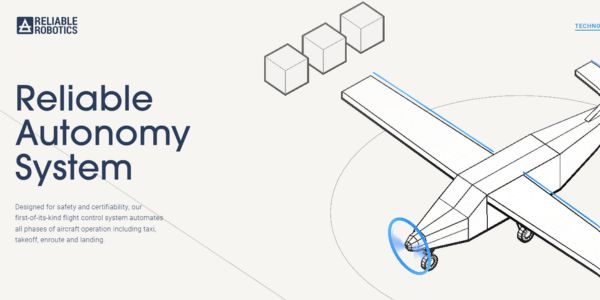
Reliable Robotics has secured $160M to scale production and deployment of its Reliable Autonomy System. This funding marks a pivotal transition for the company as it prepares for commercial cargo operations and works toward final FAA certification.
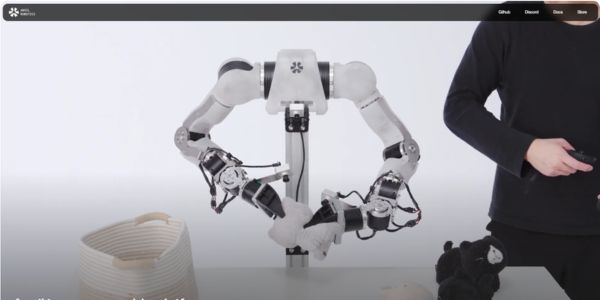
Anvil Robotics is building a physical AI modular robotics platform that replaces fragmented, bespoke stacks with composable hardware, software, and data tools. Founders, integrators, and investors should understand how this infrastructure shift could accelerate deployments in humanoids, logistics, and industrial automation.
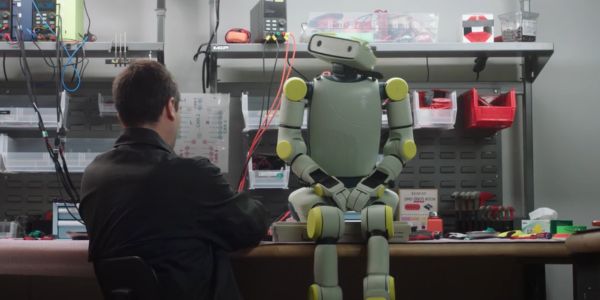
Amazon’s acquisition of Fauna Robotics brings the Sprout humanoid development platform into its Personal Robotics Group, highlighting a safety-first, developer-led approach to personal robots. The deal offers clues about how Amazon and other large buyers will evaluate humanoid platforms, from real-world deployments to exit opportunities for startups.
Mind Robotics has raised a $500 million Series A to build an AI-driven industrial automation platform trained on Rivian’s production lines. The Rivian spinout is targeting dexterous, variable factory tasks that traditional robots still struggle to automate, with a full-stack approach spanning models, hardware, and deployment infrastructure.
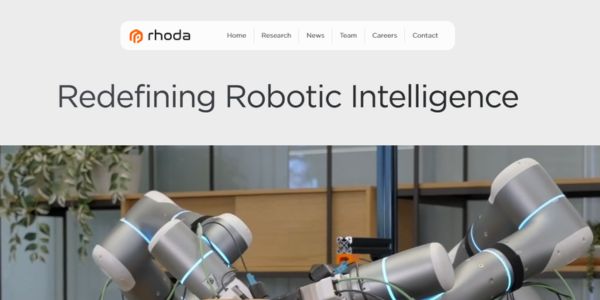
Rhoda AI has raised $450 million at a $1.7 billion valuation to launch FutureVision, a video-trained robot intelligence platform aimed at high-variability manufacturing and logistics. The feature examines the company’s Direct Video Action model, business model, and deployment challenges for founders, operators, and investors.
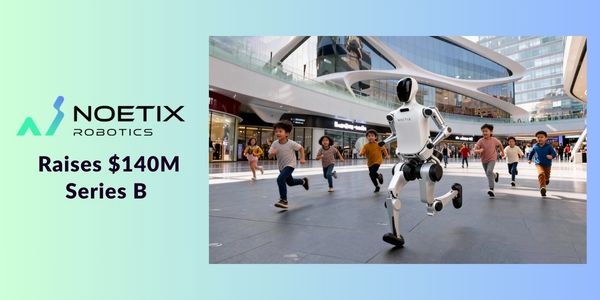
Noetix Robotics, a Beijing-based humanoid robotics startup, has closed a near-$140M Series B round to ramp up mass production and push its consumer-focused robots into everyday life.

Shenzhen’s Hai Robotics, pioneer in ACR warehouse robots, files for HK IPO after raising over $500M in funding rounds led by top VCs.

Ouster’s $35M StereoLabs acquisition fuses lidar and ZED cameras into end-to-end Physical AI sensing. Founders Cecile Schmollgruber and team drive robotics revolution.
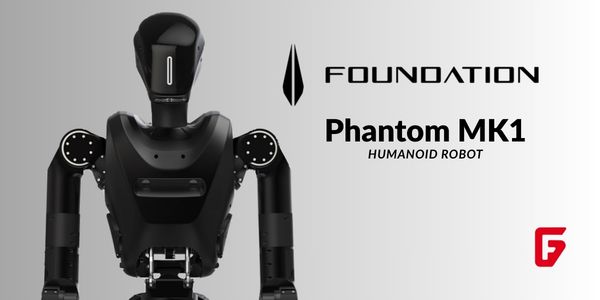
Foundation’s Phantom MK1 humanoid robot hits factories and eyes military use. Check specs, pilots, and bold 50k goal by 2027. Game-changer alert!
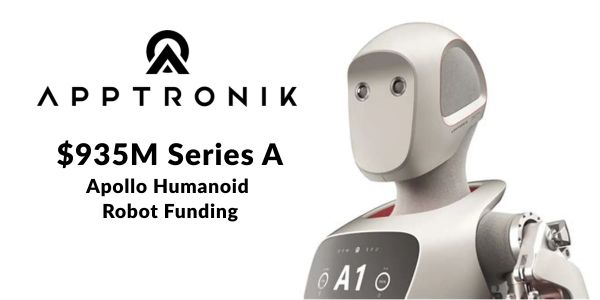
Humanoid robotics leader Apptronik just closed a massive $935M Series A, hitting a $5B valuation. Funds will boost Apollo production for factories and warehouses. Discover the investors and future plans.
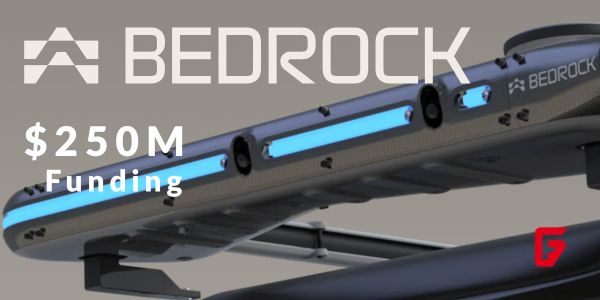
Exciting news: Bedrock Robotics just scored $270M in Series B to power up autonomous machines on job sites. Led by ex-Waymo pros, they’re tackling construction labor shortages head-on.
futureTEKnow is focused on identifying and promoting creators, disruptors and innovators, and serving as a vital resource for those interested in the latest advancements in technology.
© 2026 All Rights Reserved.