



























New Haven, Connecticut, USA
2019
Industrial Robotics, Warehouse Automation, Manufacturing Technology, Logistics Technology, Material Handling, Industrial Automation
Peer Robotics is an industrial robotics company developing autonomous mobile robots for warehouse and factory material handling. Its machines transport pallets, trolleys, bins, and production materials while operating alongside workers in existing facilities.
Founded in 2019, the company develops human-guided robotic learning and autonomous navigation technology that allows operators to demonstrate workflows directly to a robot. Its product portfolio includes the Peer3000 autonomous pallet jack and the RM250 and RM500 mobile robots, designed for different load capacities and industrial applications.
Peer Robotics designs and manufactures autonomous mobile robots that automate the movement of materials inside factories, warehouses, and distribution centers. Its systems transport goods between receiving areas, storage locations, production lines, packaging stations, and shipping docks.
The company’s Peer3000 autonomous pallet jack moves loads of up to 3,000 pounds and supports pallet handling, trailer loading and unloading, and other warehouse workflows. Its smaller RM-series robots move bins, carts, and materials between workstations.
Peer Robotics uses learning from human demonstrations to simplify deployment. Operators can physically guide a robot or control it through a dashboard to teach routes and tasks, which the robot subsequently repeats autonomously.
Its systems use onboard cameras, environmental sensors, and navigation software to detect obstacles and adapt to changing floor conditions. The robots can operate without continuous internet connectivity and support API integration with warehouse and manufacturing management systems when required.
Peer Robotics develops autonomous mobile robot technology combining computer vision, sensor fusion, and human-guided workflow learning. Its systems are designed to operate within existing industrial environments without requiring extensive changes to facility infrastructure.
The Peer3000 platform uses six onboard cameras, LiDAR, and ultrasonic sensors to observe its surroundings. These sensors provide information about people, pallets, obstacles, and available movement space. Onboard processing interprets this information to support navigation and material handling in changing warehouse conditions.
A distinguishing component is the company’s human-in-the-loop learning architecture. Instead of requiring every workflow to be programmed through specialized robotics software, an operator can guide Peer3000 through a route or remotely demonstrate the intended movement. The robot records the workflow and uses its navigation system to repeat the task autonomously.
The company’s embodied intelligence approach combines learned workflows with real-time environmental observations. When minor changes occur, such as an obstacle appearing along a route, the robot can adapt its movement. Larger workflow changes can be addressed by teaching the robot an updated route.
Peer Robotics also develops modular mechanical interfaces for handling different industrial loads, including pallets, trolleys, and carts. Its robots are designed to work with existing equipment rather than requiring all material-handling assets to be replaced.
The systems support local operation and optional API connectivity with warehouse management systems, enterprise resource planning platforms, and manufacturing execution systems. Peer Robotics has also documented work using NVIDIA Isaac ROS for localization in industrial mobile robots.
Warehouse and manufacturing automation often requires significant engineering work to map facilities, program robot movements, and integrate new equipment with existing operations.
Peer Robotics addresses part of this challenge through robots that learn material-handling workflows from employees, reducing dependence on specialized programming for routine route changes.
Its modular designs also allow manufacturers to automate pallet and trolley movement while retaining existing material-handling equipment and facility layouts.
The company’s focus on Physical AI and human-robot collaboration reflects a broader shift toward industrial machines that can adapt to changing operating conditions rather than following only fixed, preprogrammed paths.
Peer Robotics is particularly relevant to manufacturers and logistics operators seeking to automate repetitive internal transportation without rebuilding their facilities around a new robotic system.
Peer3000 is an autonomous pallet jack with a 3,000-pound payload capacity, designed for pallet movement in warehouses and manufacturing facilities. It uses cameras, LiDAR, ultrasonic sensors, and onboard intelligence to navigate existing environments. Operators can teach routes through direct interaction or remote control. The robot supports trailer loading and unloading, dock-to-storage movement, production-line replenishment, and other pallet-handling workflows. Peer Robotics lists operating endurance of eight or more hours, depending on conditions.
RM250 is a compact autonomous mobile robot with a 250-kilogram payload capacity, equivalent to approximately 550 pounds. It is designed to move materials through manufacturing and logistics facilities. Its low-profile platform supports applications involving bins, carts, and customized handling equipment. The robot provides autonomous navigation, local operation without continuous internet connectivity, and up to 12 hours of runtime under specified conditions.
RM500 is a heavy-duty autonomous mobile robot with a 500-kilogram payload capacity, approximately 1,100 pounds. It is designed for industrial material transport where larger loads must be moved between workstations, storage areas, and production processes. Its compact mobile base supports autonomous navigation and integration with application-specific handling equipment. Peer Robotics lists up to eight hours of runtime for this model.
Peer Robotics provides software for robot setup, route teaching, mission execution, and operational monitoring. Operators can define pickup and delivery locations, demonstrate workflows, and update routes when facility operations change. The system supports local operation and optional API integrations with warehouse management, enterprise resource planning, and manufacturing execution software. Its dashboard also provides remote control and operational visibility.
Pallet Transportation: Moving palletized materials between receiving docks, storage areas, production lines, and shipping locations.
Trailer Loading and Unloading: Automating pallet movement into and out of compatible dry van trailers.
Manufacturing Line Replenishment: Delivering raw materials and collecting finished goods from production stations.
Trolley Transportation: Moving existing industrial carts and trolleys through factory environments.
Bin and Kit Delivery: Transporting components, repair kits, and other materials from staging areas to assembly workstations.
Stretch-Wrap Operations: Delivering pallets to packaging equipment and collecting wrapped loads for outbound movement.
Warehouse Automation: Automating repetitive material movement without extensive changes to existing facility layouts.
Industrial Fleet Operations: Coordinating mobile robots and monitoring material movement across manufacturing and logistics facilities.
Peer Robotics develops autonomous mobile robots that transport pallets, carts, bins, and other materials inside warehouses and manufacturing facilities.
Peer Robotics was founded in 2019 and is headquartered in Detroit, Michigan.
Peer3000 is an autonomous pallet jack designed to move loads of up to 3,000 pounds. It supports warehouse pallet transportation, production-line material handling, and trailer loading and unloading.
Operators can guide the robot physically or control it through a dashboard to demonstrate a route or task. The robot records the workflow and subsequently performs the movement autonomously.
Peer Robotics designs its systems to operate within existing facilities. Deployment requirements depend on aisle dimensions, floor conditions, load configurations, safety considerations, and the intended workflow.
RM250 supports loads of up to 250 kilograms, while RM500 supports loads of up to 500 kilograms. Both are compact autonomous mobile robots designed for industrial material transportation.
Yes. Peer Robotics supports optional API integrations with warehouse management systems, enterprise resource planning software, and manufacturing execution systems. Its robots can also operate without these integrations.
Have an update, correction, or additional information about this company? Help us keep the futureTEKnow company database up to date by submitting the latest company information.

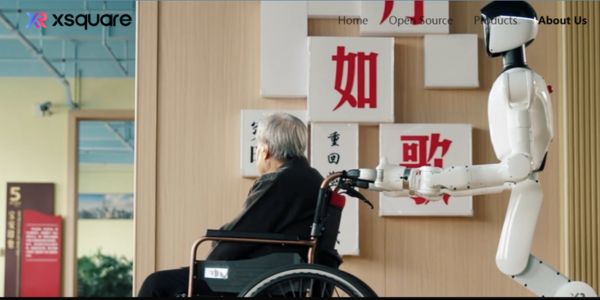
X Square Robot has raised $276M from Xiaomi, Sequoia China, and other internet giants to scale its WALL-A embodied AI model and wheeled humanoid robots from household cleaning into factories, logistics, and eldercare, reshaping how physical work is automated in China.
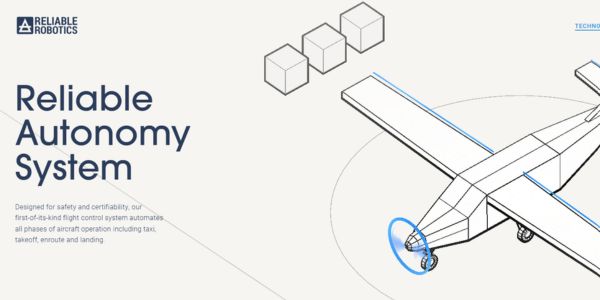
Reliable Robotics has secured $160M to scale production and deployment of its Reliable Autonomy System. This funding marks a pivotal transition for the company as it prepares for commercial cargo operations and works toward final FAA certification.
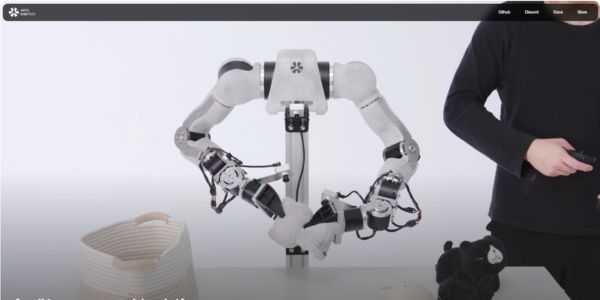
Anvil Robotics is building a physical AI modular robotics platform that replaces fragmented, bespoke stacks with composable hardware, software, and data tools. Founders, integrators, and investors should understand how this infrastructure shift could accelerate deployments in humanoids, logistics, and industrial automation.
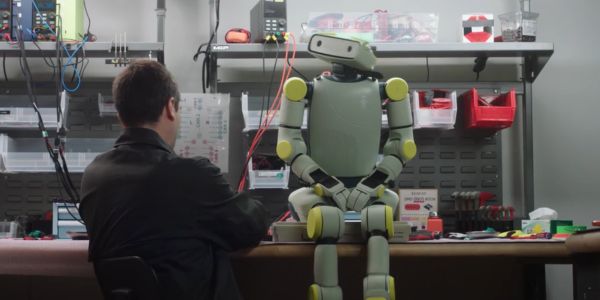
Amazon’s acquisition of Fauna Robotics brings the Sprout humanoid development platform into its Personal Robotics Group, highlighting a safety-first, developer-led approach to personal robots. The deal offers clues about how Amazon and other large buyers will evaluate humanoid platforms, from real-world deployments to exit opportunities for startups.
Mind Robotics has raised a $500 million Series A to build an AI-driven industrial automation platform trained on Rivian’s production lines. The Rivian spinout is targeting dexterous, variable factory tasks that traditional robots still struggle to automate, with a full-stack approach spanning models, hardware, and deployment infrastructure.
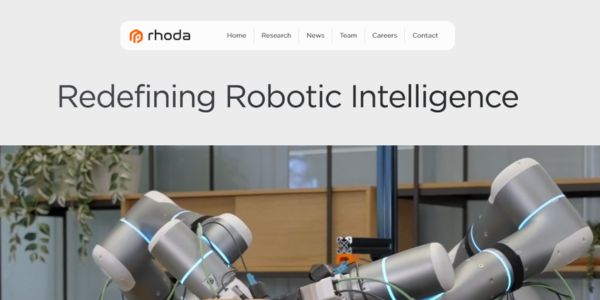
Rhoda AI has raised $450 million at a $1.7 billion valuation to launch FutureVision, a video-trained robot intelligence platform aimed at high-variability manufacturing and logistics. The feature examines the company’s Direct Video Action model, business model, and deployment challenges for founders, operators, and investors.
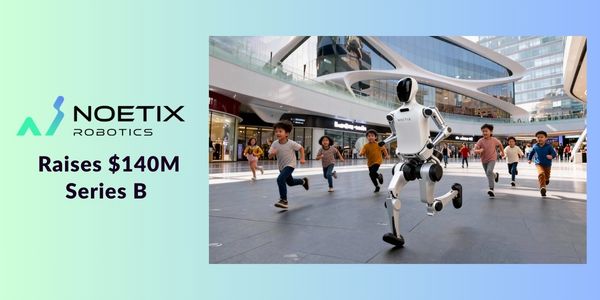
Noetix Robotics, a Beijing-based humanoid robotics startup, has closed a near-$140M Series B round to ramp up mass production and push its consumer-focused robots into everyday life.
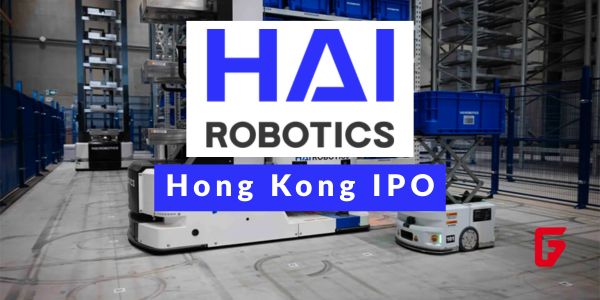
Shenzhen’s Hai Robotics, pioneer in ACR warehouse robots, files for HK IPO after raising over $500M in funding rounds led by top VCs.
Ouster’s $35M StereoLabs acquisition fuses lidar and ZED cameras into end-to-end Physical AI sensing. Founders Cecile Schmollgruber and team drive robotics revolution.
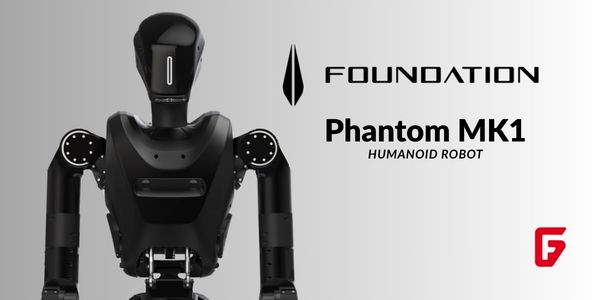
Foundation’s Phantom MK1 humanoid robot hits factories and eyes military use. Check specs, pilots, and bold 50k goal by 2027. Game-changer alert!
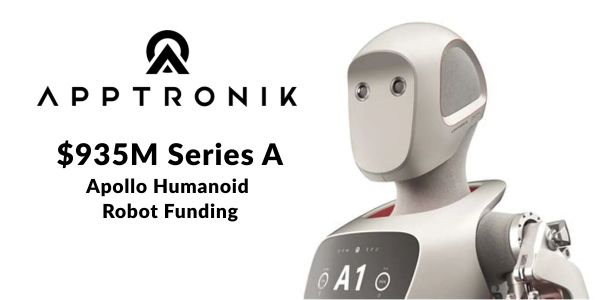
Humanoid robotics leader Apptronik just closed a massive $935M Series A, hitting a $5B valuation. Funds will boost Apollo production for factories and warehouses. Discover the investors and future plans.
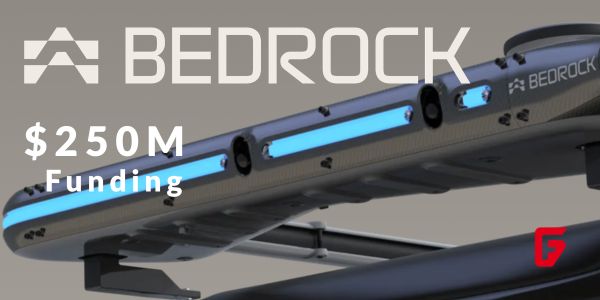
Exciting news: Bedrock Robotics just scored $270M in Series B to power up autonomous machines on job sites. Led by ex-Waymo pros, they’re tackling construction labor shortages head-on.
futureTEKnow is focused on identifying and promoting creators, disruptors and innovators, and serving as a vital resource for those interested in the latest advancements in technology.
© 2026 All Rights Reserved.