






























XPENG is a technology company developing intelligent electric vehicles, humanoid robots, autonomous driving systems, and Physical AI technologies. Its engineering programs combine artificial intelligence, custom processors, computer vision, motion control, and advanced manufacturing to develop machines capable of interpreting and interacting with physical environments.
Founded in 2014, XPENG has expanded from electric vehicle manufacturing into embodied intelligence and humanoid robotics. Its IRON robot and autonomous mobility programs use technologies developed across the company’s vehicle software, computing hardware, and AI research operations.
XPENG designs and manufactures intelligent electric vehicles while developing humanoid robots, autonomous driving software, AI processors, and related mobility technologies.
Its IRON humanoid robotics program combines articulated mechanical structures, dexterous hands, onboard computing, and AI models that interpret surroundings and control physical movement. XPENG is developing IRON for commercial service environments, with initial deployment planned in its own facilities.
The company also develops Turing AI chips and Physical AI foundation models that support perception, decision-making, and control across robotic and automotive systems.
Its autonomous mobility programs include AI-assisted electric vehicles and robotaxis designed for increasingly automated driving operations. XPENG also participates in advanced air mobility through its ARIDGE flying vehicle business.
These programs share elements of XPENG’s software engineering, sensor processing, computing, and manufacturing infrastructure, although they remain distinct product and business categories.
XPENG develops a Physical AI technology architecture that connects perception, reasoning, and motion control with robotic and automotive hardware. Its engineering stack includes custom AI processors, vision-based perception, machine learning models, electric actuation, and integrated control software.
The company’s next-generation IRON humanoid uses a human-shaped mechanical structure with a flexible spine, articulated shoulders, and dexterous hands. XPENG’s September 2026 production announcement specifies 76 degrees of freedom across the body and 21 degrees of freedom per hand for the production-line version.
IRON uses three internally developed Turing AI chips, with XPENG reporting up to 2,250 TOPS of effective computing performance. This onboard processing supports low-latency AI inference and reduces dependence on continuous cloud connectivity for selected robotic functions.
Its Physical AI model architecture combines vision-language modeling, vision-language-action processing, and vision-language-task reasoning. These components are designed to connect environmental observations with task interpretation, movement planning, and whole-body control.
XPENG also develops tactile sensing, bionic mechanical structures, and flexible exterior materials intended to support interaction in human environments. Its official technology materials describe an all-solid-state battery architecture for IRON, although publicly disclosed performance specifications remain limited.
The company applies related AI research to intelligent driving through its VLA 2.0 model and robotaxi development. These systems address different operating conditions but share the challenge of translating sensor observations into physical actions.
XPENG’s manufacturing approach adapts automotive production methods to humanoid robots. In September 2026, it reported commissioning production lines with more than 80% automation across core processes, representing a transition from laboratory prototypes toward repeatable robot manufacturing.
Humanoid robotics development increasingly depends on more than mechanical design. Companies must integrate perception, AI inference, motion control, power systems, and manufacturing processes into machines capable of operating outside controlled demonstrations.
XPENG brings automotive-scale engineering and manufacturing experience into humanoid robotics, creating a potential path from prototype development to higher-volume production.
Its investment in custom AI chips and Physical AI models also illustrates how autonomous vehicles and humanoid robots can share underlying computing and perception technologies.
The company’s IRON program is particularly relevant to embodied AI and commercial service robotics, where machines must navigate human environments and execute tasks involving movement and manipulation.
XPENG has demonstrated progress in robot manufacturing, but widespread commercial deployment, autonomous task reliability, and customer adoption remain important milestones to establish.
IRON is XPENG’s general-purpose humanoid robot designed for movement, manipulation, and interaction in human environments. Its next-generation architecture incorporates articulated joints, dexterous hands, a flexible spine, tactile sensing, and onboard AI computing. XPENG commissioned its humanoid robot production line in September 2026, with mass production targeted for late 2026 and commercial deliveries planned for 2027.
The Turing AI chip is XPENG’s internally developed processor for Physical AI applications. It supports computational workloads associated with perception, reasoning, and autonomous control. XPENG integrates three Turing chips into its next-generation IRON humanoid, reporting up to 2,250 TOPS of effective computing performance for onboard processing.
XPENG develops AI models connecting visual perception, task reasoning, and physical actions. Its robotics architecture incorporates vision-language, vision-language-task, and vision-language-action technologies. These models support the interpretation of surroundings, planning of actions, and control of robotic movement. The technology remains part of XPENG’s broader autonomous systems development.
XPENG Robotaxi is an autonomous electric vehicle platform engineered for Level 4 driving capabilities. The company announced its first production-line vehicle in May 2026. Its architecture uses four Turing AI chips with a reported combined computing capacity of up to 3,000 TOPS. XPENG is conducting road testing and developing commercial autonomous passenger transportation services.
VLA 2.0 is XPENG’s vision-language-action model for intelligent driving. It processes environmental information to support driving decisions and vehicle control. The model is being integrated into XPENG’s assisted-driving systems and autonomous vehicle development programs. Commercially available driving functions remain subject to vehicle configuration, operating conditions, and regulatory approval.
XPENG manufactures intelligent electric vehicles, including the G6, G9, P7, P7+, and X9 product families. These vehicles integrate electric propulsion, advanced driver assistance, onboard computing, and connected software. The automotive business provides engineering and manufacturing infrastructure that XPENG is extending into humanoid robotics and autonomous mobility.
Humanoid Service Robotics: Developing robots capable of providing guidance and assistance in retail stores, offices, and commercial facilities.
Embodied Artificial Intelligence: Applying AI models to machines that perceive their surroundings and perform physical actions.
Robotic Manipulation: Developing dexterous hands, articulated arms, and motion-control systems for interacting with objects.
Autonomous Transportation: Developing robotaxis and intelligent driving technologies for passenger vehicles.
Commercial Facility Operations: Testing humanoid robots for customer guidance, reception, and other service-related activities.
Robot Manufacturing: Applying automated production processes and automotive quality-control methods to humanoid hardware.
Edge AI Computing: Running perception and control models directly on robotic and vehicle computing hardware.
Human-Robot Interaction: Developing robots that combine speech, visual perception, tactile sensing, and physical movement for interaction with people.
XPENG develops intelligent electric vehicles, humanoid robots, autonomous driving software, robotaxis, and Physical AI technologies. Its products combine AI computing, perception, and motion-control systems.
XPENG was founded in 2014 and is headquartered in Guangzhou, China.
Yes. XPENG develops the IRON humanoid robot. In September 2026, the company announced the commissioning of its humanoid production line and the completion of its first production-line robot.
IRON is XPENG’s humanoid robotics platform, combining articulated mechanical systems, dexterous hands, onboard AI processors, and Physical AI models. It is being developed for commercial service applications.
XPENG targets mass production by late 2026 and initial external customer deliveries during the first half of 2027. A broader European rollout is planned for the second half of 2027.
XPENG develops Turing AI chips and Physical AI models that combine visual perception, task interpretation, and motion control. Its next-generation IRON robot uses three Turing processors for onboard AI computing.
XPENG is primarily known for intelligent electric vehicles but has expanded into humanoid robotics, autonomous transportation, and Physical AI. Robotics is an appropriate classification within futureTEKnow because of its IRON humanoid program and related autonomous systems technologies.
Have an update, correction, or additional information about this company? Help us keep the futureTEKnow company database up to date by submitting the latest company information.

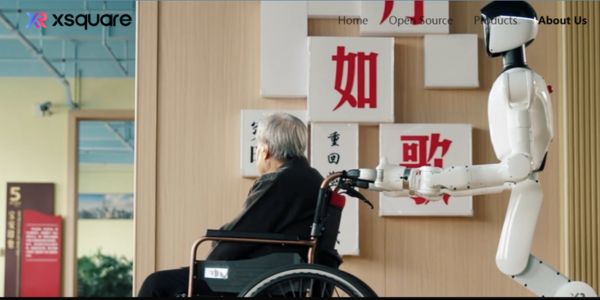
X Square Robot has raised $276M from Xiaomi, Sequoia China, and other internet giants to scale its WALL-A embodied AI model and wheeled humanoid robots from household cleaning into factories, logistics, and eldercare, reshaping how physical work is automated in China.
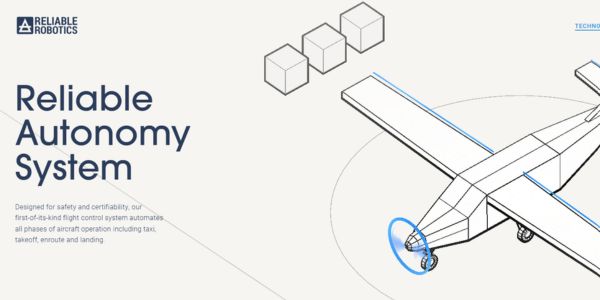
Reliable Robotics has secured $160M to scale production and deployment of its Reliable Autonomy System. This funding marks a pivotal transition for the company as it prepares for commercial cargo operations and works toward final FAA certification.
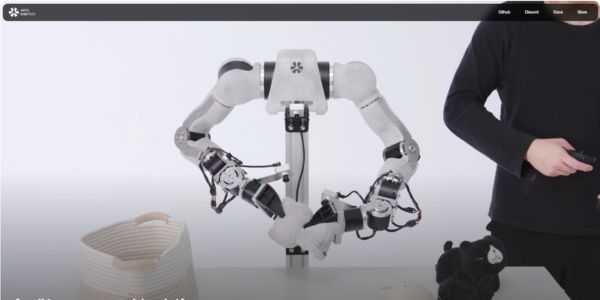
Anvil Robotics is building a physical AI modular robotics platform that replaces fragmented, bespoke stacks with composable hardware, software, and data tools. Founders, integrators, and investors should understand how this infrastructure shift could accelerate deployments in humanoids, logistics, and industrial automation.
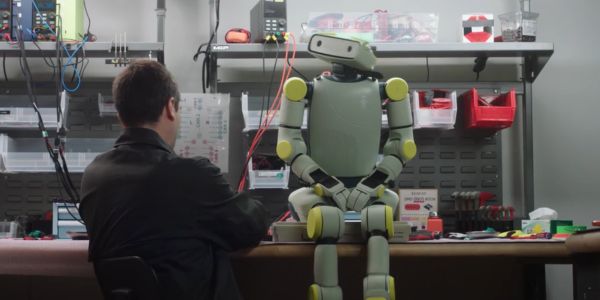
Amazon’s acquisition of Fauna Robotics brings the Sprout humanoid development platform into its Personal Robotics Group, highlighting a safety-first, developer-led approach to personal robots. The deal offers clues about how Amazon and other large buyers will evaluate humanoid platforms, from real-world deployments to exit opportunities for startups.
Mind Robotics has raised a $500 million Series A to build an AI-driven industrial automation platform trained on Rivian’s production lines. The Rivian spinout is targeting dexterous, variable factory tasks that traditional robots still struggle to automate, with a full-stack approach spanning models, hardware, and deployment infrastructure.
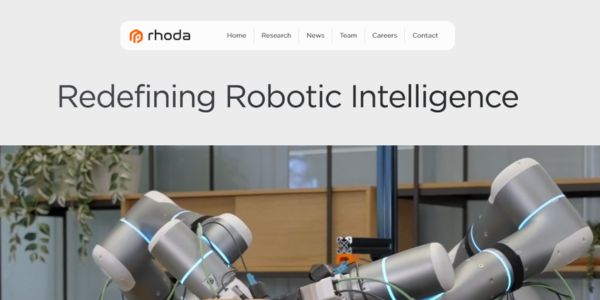
Rhoda AI has raised $450 million at a $1.7 billion valuation to launch FutureVision, a video-trained robot intelligence platform aimed at high-variability manufacturing and logistics. The feature examines the company’s Direct Video Action model, business model, and deployment challenges for founders, operators, and investors.
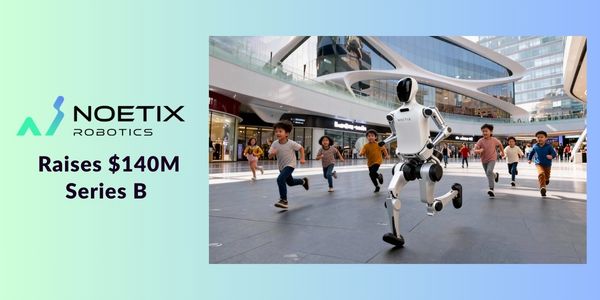
Noetix Robotics, a Beijing-based humanoid robotics startup, has closed a near-$140M Series B round to ramp up mass production and push its consumer-focused robots into everyday life.
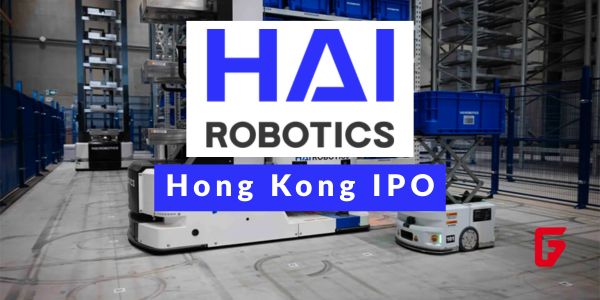
Shenzhen’s Hai Robotics, pioneer in ACR warehouse robots, files for HK IPO after raising over $500M in funding rounds led by top VCs.

Ouster’s $35M StereoLabs acquisition fuses lidar and ZED cameras into end-to-end Physical AI sensing. Founders Cecile Schmollgruber and team drive robotics revolution.
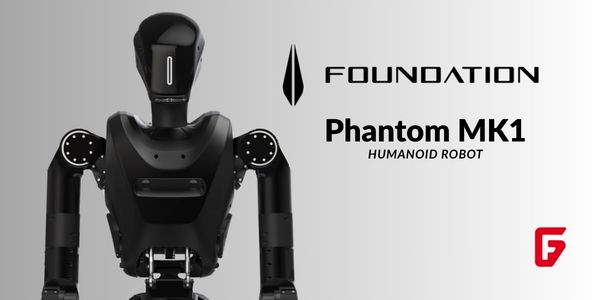
Foundation’s Phantom MK1 humanoid robot hits factories and eyes military use. Check specs, pilots, and bold 50k goal by 2027. Game-changer alert!
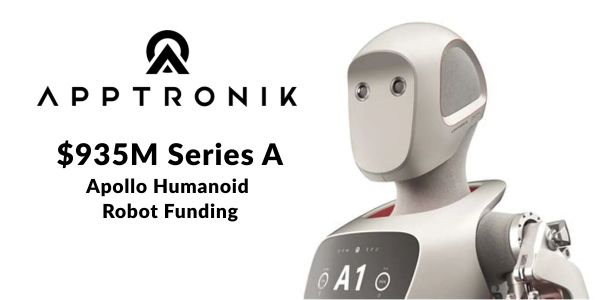
Humanoid robotics leader Apptronik just closed a massive $935M Series A, hitting a $5B valuation. Funds will boost Apollo production for factories and warehouses. Discover the investors and future plans.
Exciting news: Bedrock Robotics just scored $270M in Series B to power up autonomous machines on job sites. Led by ex-Waymo pros, they’re tackling construction labor shortages head-on.
futureTEKnow is focused on identifying and promoting creators, disruptors and innovators, and serving as a vital resource for those interested in the latest advancements in technology.
© 2026 All Rights Reserved.