






























Vilota is a robotics technology company developing visual positioning and 3D perception systems for autonomous machines operating in environments where satellite navigation is unreliable or unavailable. Its technology combines stereo cameras, inertial sensors, and onboard processing to estimate the position, orientation, and movement of robots and vehicles.
Founded in 2021, the company designs modular sensing hardware and visual-inertial navigation software for drones, autonomous mobile robots, and industrial equipment. Its systems support localization, environmental mapping, and obstacle detection in indoor, underground, and GPS-obstructed environments.
Vilota designs and manufactures visual positioning systems that allow robots and vehicles to navigate without depending exclusively on GPS or other global navigation satellite systems.
Its systems combine synchronized stereo cameras and inertial measurement sensors to calculate movement and orientation. Camera images identify visual features in the surrounding environment, while inertial sensors measure acceleration and rotation. The software combines these measurements to estimate the machine’s position in real time.
The company develops Vision-Kit-Lite and Depth-Pilot 180, compact perception modules designed for integration into drones, mobile robots, and industrial equipment.
Vilota also provides depth maps, 3D point clouds, sensor calibration, and customized navigation solutions. Its technology supports underground mining, construction sites, indoor robotics, industrial vehicle tracking, and applications requiring positioning in areas where satellite signals are obstructed.
Vilota develops visual-inertial positioning systems that estimate the location and orientation of moving machines using cameras and inertial sensors. Its technology addresses environments where global navigation satellite system signals are blocked, reflected, or degraded by buildings, underground structures, and surrounding terrain.
The company’s visual positioning architecture uses synchronized stereo cameras to observe environmental features from different viewpoints. By tracking changes in these features over time, its algorithms estimate camera movement and reconstruct spatial information about the surrounding environment.
An inertial measurement unit provides acceleration and angular motion data. Through visual-inertial odometry and sensor fusion, Vilota combines visual observations with inertial measurements to calculate the position and orientation of a robot or vehicle. This approach reduces dependence on external positioning signals, although accumulated localization drift remains a technical consideration.
Vilota’s systems also generate stereo depth maps, occupancy information, and 3D point clouds. These representations describe distances and spatial relationships around a machine, supporting obstacle detection, navigation planning, and environmental mapping.
The Depth-Pilot 180 integrates dual stereo vision with an onboard vision processing unit based on the Luxonis OAK system-on-module. It supports wide-angle depth sensing, visual-inertial pose estimation, and AI-powered perception directly on the device.
The company also develops camera synchronization and calibration methods. Accurate timing between cameras and inertial sensors is necessary for consistent 3D reconstruction and motion estimation.
Vilota’s architecture supports customized integration with robotic controllers, industrial equipment, and mission planning software. Its visual positioning technology can supplement GNSS when signals are available and provide local positioning when satellite navigation cannot be used.
Autonomous robots frequently operate in environments where GPS signals cannot provide reliable positioning. Warehouses, underground mines, tunnels, and construction sites introduce navigation challenges that limit the usefulness of satellite-based localization.
Vilota addresses these limitations through camera-based positioning and inertial sensor fusion, allowing machines to estimate their movement using information collected directly from their surroundings.
Its modular sensing products reduce the need for robotics manufacturers to develop complete visual perception hardware and software systems internally.
The company’s technology also supports 3D environmental awareness and onboard AI processing, capabilities increasingly important for autonomous mobile robots and industrial vehicles.
Vilota represents a segment of the robotics industry focused on the sensing and navigation infrastructure that enables machines to operate beyond controlled environments.
Vision-Kit-Lite is a compact visual positioning and perception module developed for drones and small robots. Its credit-card-sized hardware combines camera-based sensing with onboard localization software and provides a 360-degree field of view. The product is designed for navigation, tracking, and monitoring in environments where GPS signals are unavailable or unreliable. Vilota identifies VKL7 and VKL12 as configurations within its initial product offering.
Depth-Pilot 180 is a robotic perception sensor combining dual stereo vision, visual-inertial odometry, and onboard AI processing. Its overlapping stereo camera configuration supports wide-angle depth sensing, occupancy detection, and robot pose estimation. The device uses a Luxonis OAK system-on-module with a vision processing unit and provides an open architecture for integration with robotic systems.
Vilota’s Visual Positioning System combines synchronized cameras and inertial sensors to estimate a machine’s position and orientation without continuous satellite navigation. Its visual-inertial sensor fusion algorithms track environmental features and motion measurements to produce real-time localization information. The technology supports navigation in indoor facilities, underground environments, and other locations affected by GPS signal obstruction.
Vilota provides customized integration services for visual positioning systems used in industrial vehicles, autonomous robots, and specialized equipment. These services include camera calibration, sensor synchronization, sensor fusion, GPS augmentation, and navigation software integration. The company adapts its hardware and algorithms to customer-specific operating conditions and existing mission planning or fleet management systems.
Autonomous Mobile Robots: Providing camera-based localization and environmental perception for robots operating in warehouses, factories, and industrial facilities.
Drone Navigation: Supporting unmanned aerial vehicles in locations where GPS signals are obstructed or unavailable.
Underground Mining: Enabling vehicle positioning, equipment tracking, and navigation within tunnels and underground work areas.
Construction Equipment: Supporting localization of machinery operating near structures, tunnels, bridges, and other environments affected by satellite signal interference.
Industrial Automation: Integrating perception sensors into autonomous machinery and robotic equipment.
Obstacle Detection: Generating stereo depth maps and occupancy information to support collision avoidance and navigation planning.
3D Mapping: Producing point clouds and spatial measurements for environmental reconstruction and surveying applications.
Fleet Localization: Supporting equipment tracking and local positioning systems for industrial vehicle fleets.
Vilota develops visual positioning systems and robotic perception hardware that enable machines to estimate their location and movement without relying exclusively on GPS or other satellite navigation systems.
Vilota was founded in 2021 and is headquartered in Singapore.
Vilota’s Visual Positioning System combines stereo camera measurements with inertial sensor data to estimate the position and orientation of a robot or vehicle in real time.
Yes. Vilota’s visual-inertial positioning technology can estimate movement and orientation using camera images and inertial measurements when GPS signals are unavailable or unreliable.
Vision-Kit-Lite is a compact perception and localization module for drones and small robots. It provides a 360-degree field of view and supports positioning, navigation, and monitoring applications.
Depth-Pilot 180 is a robotic perception sensor that combines dual stereo cameras, visual-inertial odometry, depth sensing, and onboard AI processing. It is designed for integration into robotic systems requiring localization and spatial awareness.
Vilota develops positioning and perception systems for robotics, mining, construction, industrial automation, drones, and mobility applications.
Have an update, correction, or additional information about this company? Help us keep the futureTEKnow company database up to date by submitting the latest company information.

X Square Robot has raised $276M from Xiaomi, Sequoia China, and other internet giants to scale its WALL-A embodied AI model and wheeled humanoid robots from household cleaning into factories, logistics, and eldercare, reshaping how physical work is automated in China.
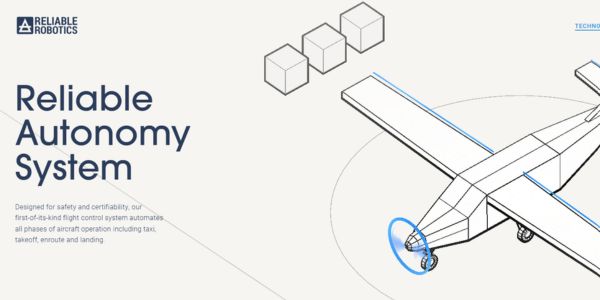
Reliable Robotics has secured $160M to scale production and deployment of its Reliable Autonomy System. This funding marks a pivotal transition for the company as it prepares for commercial cargo operations and works toward final FAA certification.
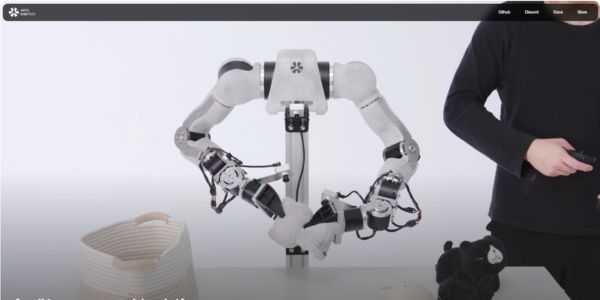
Anvil Robotics is building a physical AI modular robotics platform that replaces fragmented, bespoke stacks with composable hardware, software, and data tools. Founders, integrators, and investors should understand how this infrastructure shift could accelerate deployments in humanoids, logistics, and industrial automation.
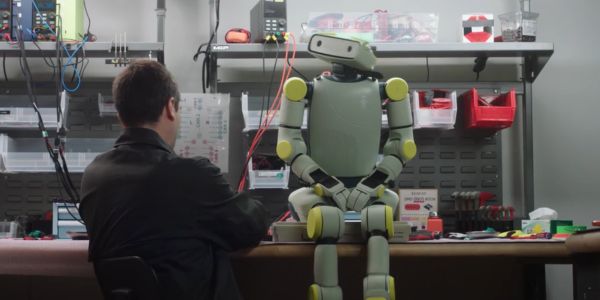
Amazon’s acquisition of Fauna Robotics brings the Sprout humanoid development platform into its Personal Robotics Group, highlighting a safety-first, developer-led approach to personal robots. The deal offers clues about how Amazon and other large buyers will evaluate humanoid platforms, from real-world deployments to exit opportunities for startups.
Mind Robotics has raised a $500 million Series A to build an AI-driven industrial automation platform trained on Rivian’s production lines. The Rivian spinout is targeting dexterous, variable factory tasks that traditional robots still struggle to automate, with a full-stack approach spanning models, hardware, and deployment infrastructure.
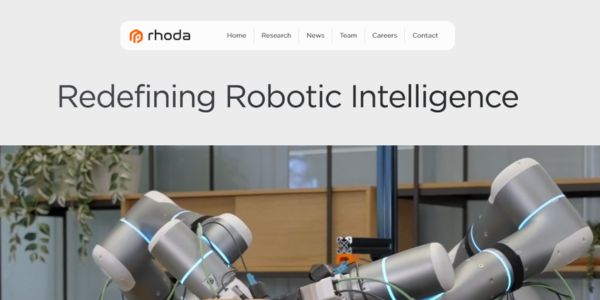
Rhoda AI has raised $450 million at a $1.7 billion valuation to launch FutureVision, a video-trained robot intelligence platform aimed at high-variability manufacturing and logistics. The feature examines the company’s Direct Video Action model, business model, and deployment challenges for founders, operators, and investors.
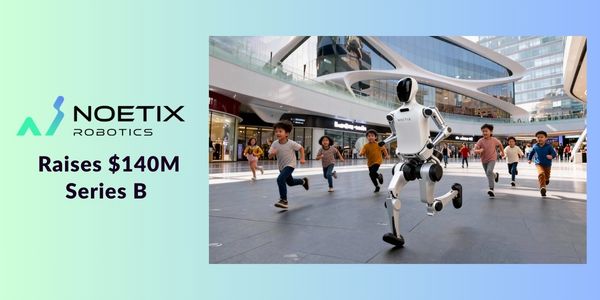
Noetix Robotics, a Beijing-based humanoid robotics startup, has closed a near-$140M Series B round to ramp up mass production and push its consumer-focused robots into everyday life.
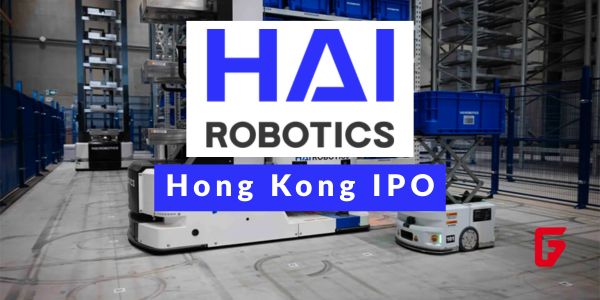
Shenzhen’s Hai Robotics, pioneer in ACR warehouse robots, files for HK IPO after raising over $500M in funding rounds led by top VCs.

Ouster’s $35M StereoLabs acquisition fuses lidar and ZED cameras into end-to-end Physical AI sensing. Founders Cecile Schmollgruber and team drive robotics revolution.
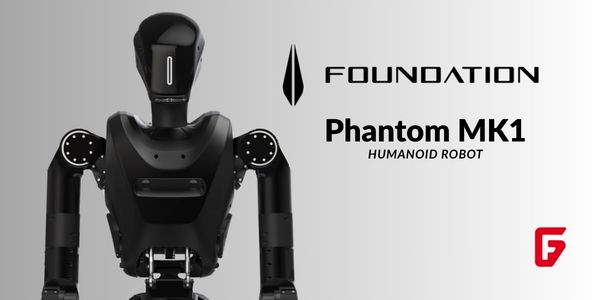
Foundation’s Phantom MK1 humanoid robot hits factories and eyes military use. Check specs, pilots, and bold 50k goal by 2027. Game-changer alert!
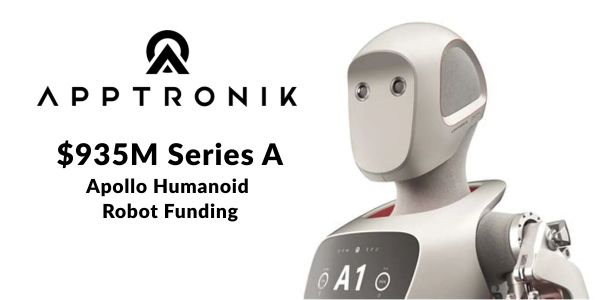
Humanoid robotics leader Apptronik just closed a massive $935M Series A, hitting a $5B valuation. Funds will boost Apollo production for factories and warehouses. Discover the investors and future plans.
Exciting news: Bedrock Robotics just scored $270M in Series B to power up autonomous machines on job sites. Led by ex-Waymo pros, they’re tackling construction labor shortages head-on.
futureTEKnow is focused on identifying and promoting creators, disruptors and innovators, and serving as a vital resource for those interested in the latest advancements in technology.
© 2026 All Rights Reserved.