























Uttar Pradesh, India
2023
Industrial Robotics, Security Technology, Industrial Inspection, Infrastructure Monitoring, Construction Technology, Robotics Research
xTerra Robotics is a robotics company developing autonomous legged robots and robotic actuation systems for industrial inspection, security, construction, and research. Its machines are engineered to navigate uneven terrain, stairs, slopes, and other environments that can limit conventional wheeled robots.
The company’s portfolio includes quadruped robots, wheeled-legged platforms, mobile manipulators, collaborative robotic arms, and precision actuators. Its systems combine mechanical engineering, autonomous navigation, perception sensors, and motion control software to support mobility and task execution in unstructured environments.
xTerra Robotics designs and manufactures robotic platforms capable of moving through environments where conventional wheeled machines face mobility challenges. Its quadruped robots use independently controlled legs to traverse uneven surfaces, while onboard sensors and navigation software support autonomous and remotely supervised operations.
The company develops industrial inspection and surveillance robots equipped with cameras, LiDAR, thermal sensors, and configurable payloads. These systems can support equipment monitoring, site surveys, perimeter observation, and research into autonomous navigation.
xTerra Robotics also manufactures quasi-direct-drive actuators and robotic manipulators used in legged locomotion and automation. Its products are supplied to educational institutions, research laboratories, and industrial organizations developing or deploying robotic systems.
xTerra Robotics develops legged robotic systems that combine quasi-direct-drive actuation, autonomous navigation, sensor fusion, and real-time motion control. Its quadruped platforms use independently actuated joints to control body movement, balance, and locomotion across uneven surfaces.
The company’s QDD A2 actuators use low-reduction gearing and integrated sensing to support responsive joint control. The actuator is specified with 12 Nm peak torque, a mass of 550 grams, and a 14-bit encoder. This architecture supports force-aware movement and rapid adjustments to changing ground conditions.
For autonomous navigation, xTerra integrates simultaneous localization and mapping (SLAM), inertial measurement units, joint-state estimation, and obstacle avoidance. Its robotic platforms can combine LiDAR, cameras, and depth sensors to construct representations of their surroundings and navigate toward designated waypoints.
The SVAN M2 supports ROS 2 integration and an open software development kit for custom payloads and applications. The newer DHAV quadruped incorporates 360-degree 3D LiDAR, stereo depth perception, and software interfaces using ROS 2, Python, and C++. Remote operation is supported through dedicated controls and web-based interfaces.
xTerra also develops mobile manipulation systems that combine legged mobility with articulated robotic arms. This extends its technology from terrain navigation toward physical interaction with objects and equipment in the operating environment.
Industrial facilities, construction sites, and security environments often contain stairs, obstacles, irregular surfaces, and confined spaces that complicate the deployment of conventional wheeled robots. Legged systems provide an alternative mobility architecture for navigating these environments.
xTerra Robotics addresses this challenge through locally engineered quadruped platforms and precision actuation technology. By developing both robotic hardware and control software, the company can adapt its machines to different inspection, surveillance, and research requirements.
Its deployments in universities and industrial settings demonstrate applications for legged robotics beyond laboratory demonstrations. The company’s expanding portfolio also reflects the growing use of autonomous mobile systems for monitoring infrastructure and operating in environments where direct human access may be difficult or hazardous.
DHAV is xTerra Robotics’ next-generation autonomous quadruped platform designed for security, surveillance, construction, and industrial inspection. The robot incorporates 360-degree 3D LiDAR, stereo depth perception, 12 quasi-direct-drive actuators, and ROS 2-based software interfaces. Its published specifications include a maximum weight of 19.5 kg and a mobility speed of approximately 12 km/h. The platform is currently offered through pre-sales discussions.
DHAV-Hy is a wheeled-legged robotic platform combining rolling movement with articulated legs. Its hybrid configuration is designed to travel efficiently over relatively smooth surfaces while retaining the ability to negotiate terrain that conventional wheeled robots cannot easily cross.
SVAN M2 is a commercial quadruped robot for industrial inspection and robotics research. It supports autonomous waypoint navigation, SLAM-based mapping, ROS 2 integration, and configurable sensor payloads. The platform has been delivered to research institutions and industrial organizations for work involving legged locomotion, navigation, inspection, and autonomous systems development.
SCORP is a legged mobile manipulator that combines quadruped mobility with an articulated robotic arm. The platform is designed to extend robotic capabilities beyond movement and observation by enabling physical interaction with objects and equipment in difficult-to-access environments.
COBOT C1 is a five-axis collaborative robotic arm for research and automation applications. It uses a Raspberry Pi 4B computer, ROS middleware, and configurable grippers. Published specifications include a 400 g payload capacity, 81 cm maximum reach, and a total weight of 2.3 kg.
QDD A2 is a compact quasi-direct-drive actuator designed for legged robots and other robotic systems requiring responsive joint movement. The actuator provides 12 Nm peak torque, weighs 550 g, and incorporates a 14-bit encoder for joint position feedback and precision motion control.
Industrial Inspection: Using quadruped robots to monitor machinery, equipment, and infrastructure in factories, power plants, and industrial facilities.
Security and Surveillance: Supporting perimeter monitoring, remote observation, and patrol operations using mobile robots equipped with cameras and sensors.
Construction Site Monitoring: Navigating uneven construction environments to collect visual information, conduct surveys, and support 3D mapping.
Energy Infrastructure: Inspecting power stations, industrial equipment, and difficult-to-access infrastructure using robotic sensor platforms.
Robotics Research: Providing programmable quadruped systems for research into locomotion, autonomous navigation, perception, and motion control.
Mobile Manipulation: Combining legged mobility with articulated arms to investigate robotic interaction with equipment and objects.
Robotic Actuation: Supplying precision actuators for robotic joints, legged platforms, and experimental automation systems.
SVAN M2 is xTerra Robotics’ established commercial quadruped platform used in research and industrial inspection. DHAV is its newer quadruped platform designed for security, surveillance, and industrial applications, with pre-sales currently open.
DHAV-Hy is a wheeled-legged robot that combines rolling movement on suitable surfaces with articulated leg mobility for negotiating more difficult terrain.
SCORP is a mobile manipulation platform that combines a four-legged robot with an articulated arm, allowing researchers and developers to explore robotic movement and physical interaction within the same system.
The company’s robotic platforms combine mapping and localization software, inertial sensors, joint-state estimation, and perception systems such as LiDAR and depth cameras to support waypoint navigation and obstacle avoidance.
QDD A2 is a quasi-direct-drive actuator designed for robotic joint movement. It provides 12 Nm peak torque, weighs 550 g, and uses a 14-bit encoder for position feedback.
Yes. The company’s legged robotic platforms support ROS 2 integration, allowing developers and researchers to work with navigation software, sensor data, and custom robotics applications.
Yes. The company has reported SVAN M2 deliveries to organizations including Siemens Energy, IIT Bombay, NIT Calicut, and Marwadi University. Its newer DHAV platform is being offered through pre-sales discussions.
Have an update, correction, or additional information about this company? Help us keep the futureTEKnow company database up to date by submitting the latest company information.

X Square Robot has raised $276M from Xiaomi, Sequoia China, and other internet giants to scale its WALL-A embodied AI model and wheeled humanoid robots from household cleaning into factories, logistics, and eldercare, reshaping how physical work is automated in China.
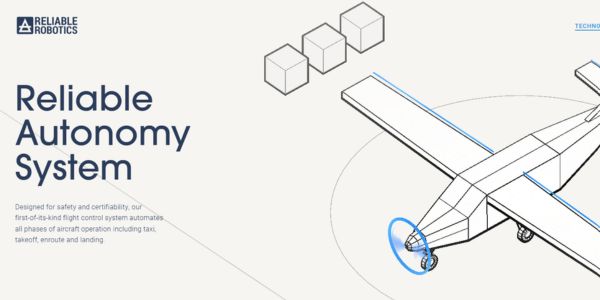
Reliable Robotics has secured $160M to scale production and deployment of its Reliable Autonomy System. This funding marks a pivotal transition for the company as it prepares for commercial cargo operations and works toward final FAA certification.
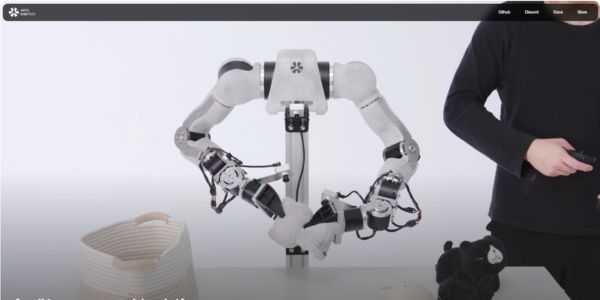
Anvil Robotics is building a physical AI modular robotics platform that replaces fragmented, bespoke stacks with composable hardware, software, and data tools. Founders, integrators, and investors should understand how this infrastructure shift could accelerate deployments in humanoids, logistics, and industrial automation.
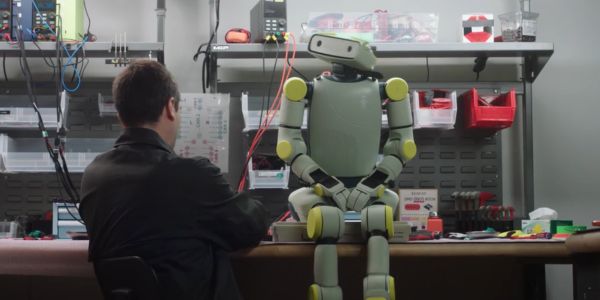
Amazon’s acquisition of Fauna Robotics brings the Sprout humanoid development platform into its Personal Robotics Group, highlighting a safety-first, developer-led approach to personal robots. The deal offers clues about how Amazon and other large buyers will evaluate humanoid platforms, from real-world deployments to exit opportunities for startups.
Mind Robotics has raised a $500 million Series A to build an AI-driven industrial automation platform trained on Rivian’s production lines. The Rivian spinout is targeting dexterous, variable factory tasks that traditional robots still struggle to automate, with a full-stack approach spanning models, hardware, and deployment infrastructure.
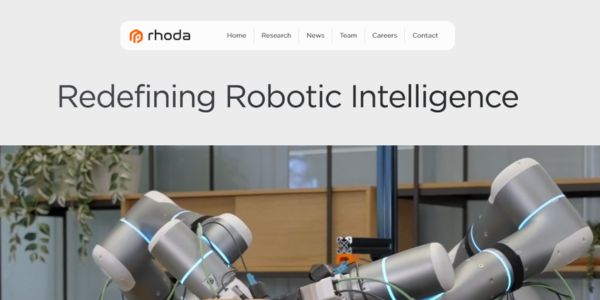
Rhoda AI has raised $450 million at a $1.7 billion valuation to launch FutureVision, a video-trained robot intelligence platform aimed at high-variability manufacturing and logistics. The feature examines the company’s Direct Video Action model, business model, and deployment challenges for founders, operators, and investors.
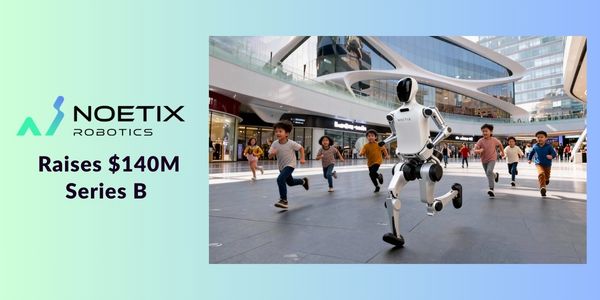
Noetix Robotics, a Beijing-based humanoid robotics startup, has closed a near-$140M Series B round to ramp up mass production and push its consumer-focused robots into everyday life.
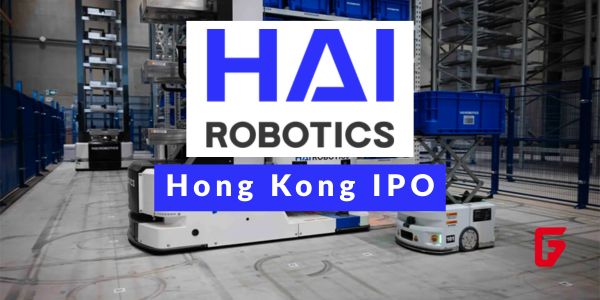
Shenzhen’s Hai Robotics, pioneer in ACR warehouse robots, files for HK IPO after raising over $500M in funding rounds led by top VCs.

Ouster’s $35M StereoLabs acquisition fuses lidar and ZED cameras into end-to-end Physical AI sensing. Founders Cecile Schmollgruber and team drive robotics revolution.
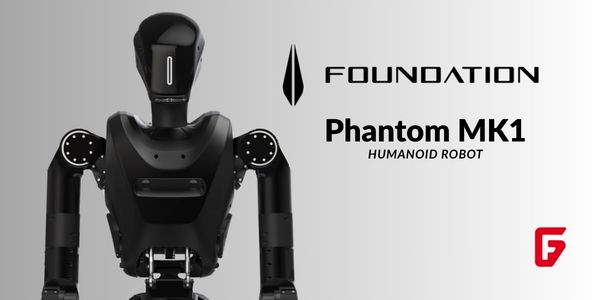
Foundation’s Phantom MK1 humanoid robot hits factories and eyes military use. Check specs, pilots, and bold 50k goal by 2027. Game-changer alert!
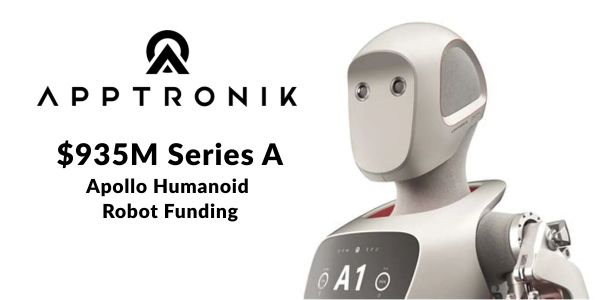
Humanoid robotics leader Apptronik just closed a massive $935M Series A, hitting a $5B valuation. Funds will boost Apollo production for factories and warehouses. Discover the investors and future plans.
Exciting news: Bedrock Robotics just scored $270M in Series B to power up autonomous machines on job sites. Led by ex-Waymo pros, they’re tackling construction labor shortages head-on.
futureTEKnow is focused on identifying and promoting creators, disruptors and innovators, and serving as a vital resource for those interested in the latest advancements in technology.
© 2026 All Rights Reserved.