

























Seattle, Washington, USA
2023
Defense, Military Technology, Robotics, Autonomous Vehicles, Artificial Intelligence, Ground Transportation, Defense Logistics, Aerospace and Defense
Overland AI is a robotics and defense technology company developing autonomous ground vehicles and off-road AI navigation systems for complex, unstructured environments. The company combines machine learning, computer vision, robotic perception, and autonomous motion planning to enable vehicles to operate across difficult terrain without continuous human control. Its technology focuses on autonomous ground mobility, particularly for military operations where conventional navigation systems may be unreliable. Overland AI develops both specialized unmanned vehicles and software that can add autonomous capabilities to existing ground vehicle platforms.
Overland AI develops AI-powered autonomous ground systems that enable military vehicles to navigate rugged terrain, execute missions, and coordinate operations without requiring a driver onboard.
The company builds its own unmanned ground vehicles and provides autonomy software that can be integrated into existing wheeled and tracked platforms. Its systems support off-road navigation, reconnaissance, equipment transportation, and other military operations in environments with limited GPS or communications.
Overland AI also develops multi-vehicle command-and-control software, allowing a single operator to assign missions, monitor vehicle movements, and coordinate multiple autonomous platforms.
Its technology has been evaluated through U.S. military programs, including DARPA’s Robotic Autonomy in Complex Environments with Resiliency (RACER) program and Army autonomous vehicle demonstrations.
The company also has explored civilian applications, including autonomous vehicles for wildfire response.
Overland AI’s technology centers on OverDrive, an autonomous off-road navigation software stack designed to operate in unfamiliar terrain and challenging environmental conditions.
The system combines machine learning, robotic perception, terrain analysis, and adaptive motion planning to help vehicles identify navigable areas and determine appropriate driving paths. Unlike conventional autonomous driving systems designed primarily for marked roads, OverDrive addresses environments containing rocks, vegetation, steep slopes, mud, and other unpredictable obstacles.
Its perception architecture incorporates LiDAR, stereo cameras, and onboard sensor fusion to interpret surrounding terrain. Depending on the vehicle configuration, the system can use active sensing, passive sensing, or both. Integrated inertial sensors and vehicle-motion data support localization and navigation.
Overland AI also develops autonomy capabilities for GPS-denied and communications-degraded environments, allowing vehicles to continue executing certain navigation tasks without continuous remote guidance.
The company’s SPARK autonomy kit integrates the computing hardware, sensors, communications, and drive-by-wire interfaces required to add OverDrive to existing vehicles.
OverWatch provides a higher-level software interface for mission planning and fleet coordination. It enables operators to assign tasks, monitor vehicle status, and adjust mission objectives across multiple autonomous systems.
Together, these technologies create an integrated architecture combining robotic mobility, environmental perception, autonomous decision-making, and human-supervised fleet operations.
Overland AI is advancing autonomous mobility beyond structured roads, addressing one of the more difficult challenges in robotics: enabling vehicles to navigate unfamiliar terrain where road markings, reliable GPS, and predictable conditions may not exist.
Its technology is particularly relevant to military operations, where personnel often need to move equipment or perform reconnaissance in hazardous locations. Autonomous ground vehicles can reduce direct human exposure while extending operational capabilities.
The company’s vehicle-agnostic autonomy architecture is another important distinction. Rather than requiring organizations to replace entire fleets, Overland AI can integrate autonomous navigation into compatible existing platforms.
Its participation in DARPA’s RACER program and military field evaluations demonstrates the growing importance of off-road autonomy within physical AI and defense robotics.
The same underlying technology also has potential applications in emergency response and other environments where conventional autonomous vehicles face limitations.
ULTRA is Overland AI’s fully autonomous tactical ground vehicle, designed for off-road military operations in difficult and contested environments.
The four-wheel-drive vehicle incorporates OverDrive autonomy software, SPARK hardware infrastructure, and a modular payload deck that supports different mission configurations.
According to the company’s published specifications, ULTRA has a payload capacity of approximately 1,000 pounds, a top speed of 35 miles per hour, and a cruising range of up to 100 miles.
Its intended applications include reconnaissance, logistics support, equipment transportation, and integration with unmanned aerial systems. The platform is designed to navigate challenging terrain without depending on predefined maps or continuous GPS availability.
OverDrive is Overland AI’s off-road autonomous navigation software platform, developed to provide autonomous driving capabilities across different ground vehicle types.
The software combines terrain perception, route planning, and adaptive vehicle control to support navigation through unfamiliar environments.
OverDrive is designed for wheeled and tracked vehicles with different mobility characteristics. Its modular architecture allows the same core autonomy software to be adapted to multiple vehicle platforms, including military tactical vehicles and specialized robotic systems.
SPARK is a vehicle autonomy retrofit kit that integrates OverDrive software with sensors, onboard computing, communications equipment, and drive-by-wire controls.
The system enables compatible existing vehicles to operate autonomously without requiring a completely new vehicle design.
SPARK has been integrated with platforms including the GM Infantry Squad Vehicle, Textron Ripsaw vehicles, Oshkosh ROGUE Fires, and Polaris vehicles.
Its architecture supports both autonomous operation and configurations that retain manual driving capabilities.
OverWatch is Overland AI’s command-and-control platform for autonomous ground vehicle operations.
The software allows operators to plan routes, assign objectives, monitor vehicle status, and coordinate multiple robotic vehicles through a shared interface.
Its capabilities include mission planning, vehicle telemetry, payload coordination, and AI-assisted mission adjustments.
OverWatch also provides integration interfaces for connecting autonomous ground vehicles with existing military command systems and mission equipment.
Overland AI’s technology is primarily developed for military ground operations and defense logistics, where autonomous vehicles can transport equipment, navigate hazardous terrain, and support reconnaissance missions.
Its ULTRA platform can be configured for unmanned resupply, surveillance, and carrying mission-specific equipment. SPARK enables existing tactical vehicles to perform autonomous navigation while retaining compatibility with their original vehicle platforms.
In military engineering and expeditionary operations, autonomous vehicles can support equipment movement and other tasks in areas where personnel face elevated risks.
Overland AI’s systems also support coordinated ground operations involving multiple autonomous vehicles and integration with aerial reconnaissance systems.
Outside defense, the company has worked with CAL FIRE to evaluate autonomous ground vehicles for wildfire response. This demonstrates potential uses for robotic mobility in difficult terrain during emergency operations.
Yes. Overland AI develops autonomous navigation technology designed for GPS-denied environments. Its OverDrive software uses onboard perception, terrain analysis, and motion planning to navigate without relying on continuous satellite positioning or predefined maps.
OverDrive is the software responsible for autonomous navigation, terrain perception, and vehicle movement. SPARK is the hardware and integration kit that brings OverDrive to compatible vehicles by adding sensors, computing equipment, communications, and vehicle-control interfaces.
Yes. Its SPARK system is designed to retrofit compatible wheeled and tracked vehicles with autonomous capabilities. Demonstrated platforms include the GM Infantry Squad Vehicle, Textron Ripsaw, Polaris vehicles, and Oshkosh ROGUE Fires.
OverWatch is designed for one-to-many control, allowing a single operator to supervise and coordinate multiple autonomous vehicles. The exact number depends on mission requirements, vehicle configurations, and operational constraints. The company does not publish a universal maximum for every deployment.
Yes. Overland AI participated in DARPA’s RACER program and has conducted demonstrations with U.S. Army units. Its ULTRA vehicles have been used in field exercises involving autonomous navigation, coordinated operations, and military engineering tasks. The company has also demonstrated autonomy on a U.S. Marine Corps ROGUE Fires platform.
Have an update, correction, or additional information about this company? Help us keep the futureTEKnow company database up to date by submitting the latest company information.

X Square Robot has raised $276M from Xiaomi, Sequoia China, and other internet giants to scale its WALL-A embodied AI model and wheeled humanoid robots from household cleaning into factories, logistics, and eldercare, reshaping how physical work is automated in China.
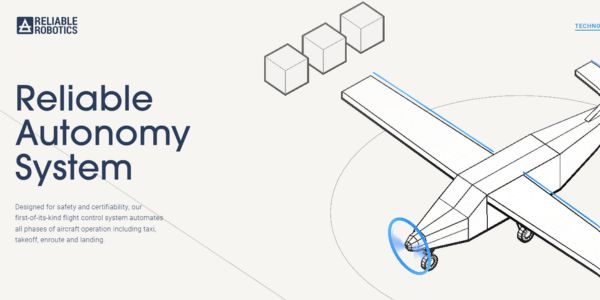
Reliable Robotics has secured $160M to scale production and deployment of its Reliable Autonomy System. This funding marks a pivotal transition for the company as it prepares for commercial cargo operations and works toward final FAA certification.

Anvil Robotics is building a physical AI modular robotics platform that replaces fragmented, bespoke stacks with composable hardware, software, and data tools. Founders, integrators, and investors should understand how this infrastructure shift could accelerate deployments in humanoids, logistics, and industrial automation.
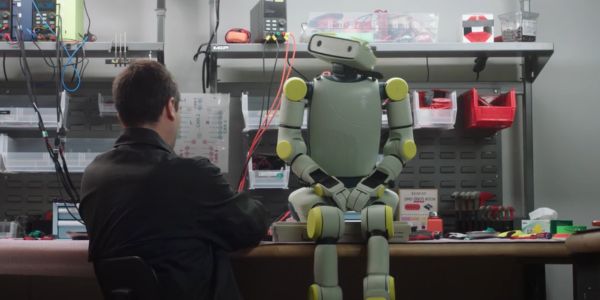
Amazon’s acquisition of Fauna Robotics brings the Sprout humanoid development platform into its Personal Robotics Group, highlighting a safety-first, developer-led approach to personal robots. The deal offers clues about how Amazon and other large buyers will evaluate humanoid platforms, from real-world deployments to exit opportunities for startups.
Mind Robotics has raised a $500 million Series A to build an AI-driven industrial automation platform trained on Rivian’s production lines. The Rivian spinout is targeting dexterous, variable factory tasks that traditional robots still struggle to automate, with a full-stack approach spanning models, hardware, and deployment infrastructure.

Rhoda AI has raised $450 million at a $1.7 billion valuation to launch FutureVision, a video-trained robot intelligence platform aimed at high-variability manufacturing and logistics. The feature examines the company’s Direct Video Action model, business model, and deployment challenges for founders, operators, and investors.

Noetix Robotics, a Beijing-based humanoid robotics startup, has closed a near-$140M Series B round to ramp up mass production and push its consumer-focused robots into everyday life.

Shenzhen’s Hai Robotics, pioneer in ACR warehouse robots, files for HK IPO after raising over $500M in funding rounds led by top VCs.

Ouster’s $35M StereoLabs acquisition fuses lidar and ZED cameras into end-to-end Physical AI sensing. Founders Cecile Schmollgruber and team drive robotics revolution.
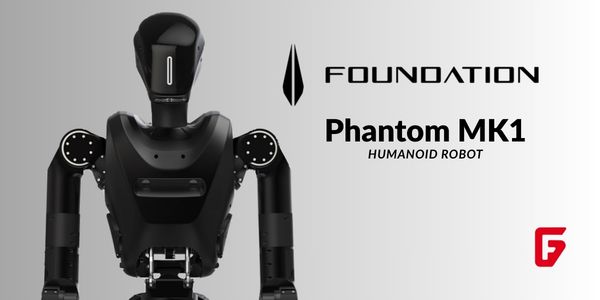
Foundation’s Phantom MK1 humanoid robot hits factories and eyes military use. Check specs, pilots, and bold 50k goal by 2027. Game-changer alert!
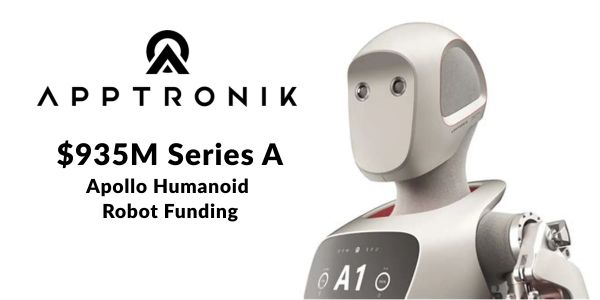
Humanoid robotics leader Apptronik just closed a massive $935M Series A, hitting a $5B valuation. Funds will boost Apollo production for factories and warehouses. Discover the investors and future plans.
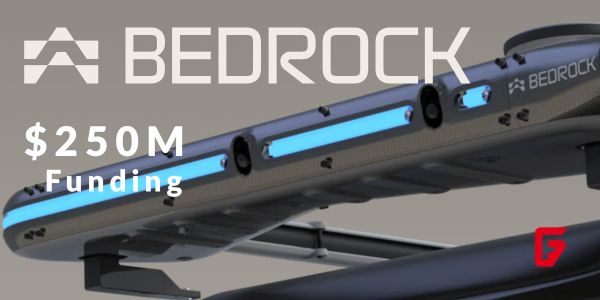
Exciting news: Bedrock Robotics just scored $270M in Series B to power up autonomous machines on job sites. Led by ex-Waymo pros, they’re tackling construction labor shortages head-on.
futureTEKnow is focused on identifying and promoting creators, disruptors and innovators, and serving as a vital resource for those interested in the latest advancements in technology.
© 2026 All Rights Reserved.