














Anduril Industries is a defense technology company developing autonomous aircraft, maritime vehicles, surveillance systems, and AI-powered software for military and security operations. Its products combine sensors, robotics, computing, and communications to support missions across land, air, and underwater environments.
Founded in 2017, Anduril develops both physical autonomous platforms and the software used to coordinate them. Its central technology is Lattice, a software platform for integrating sensors, autonomous vehicles, and command systems into a shared operational environment.
Anduril designs, manufactures, and integrates autonomous systems for surveillance, reconnaissance, air defense, maritime operations, and other defense missions. Its hardware portfolio includes unmanned aircraft, autonomous underwater vehicles, mobile sensing platforms, and systems designed to detect and respond to aerial threats.
The company’s Lattice software processes information from cameras, radar, and other sensors to help operators identify objects, understand activity, and coordinate connected systems. Lattice also provides interfaces for supervising autonomous vehicles and integrating third-party technologies.
Anduril develops Ghost and Altius unmanned aircraft, Roadrunner reusable aerial vehicles, and Dive-series underwater systems, alongside surveillance equipment such as Sentry and Wisp.
Its engineering activities extend into manufacturing software, communications infrastructure, electronic warfare, and autonomous aircraft development. The company is expanding production capabilities to manufacture its systems at larger volumes.
Anduril develops an integrated technology architecture combining robotic platforms, artificial intelligence, sensor fusion, and command-and-control software. Its systems collect information from multiple sources, interpret operating conditions, and support coordinated activity across autonomous vehicles and human-operated equipment.
The company’s Lattice platform provides a software layer for connecting sensors, vehicles, and operational applications. It combines information from radar, electro-optical cameras, infrared imaging, and other sources to maintain a shared representation of the environment. Its command interfaces allow operators to supervise connected systems and review information collected by autonomous platforms.
Anduril’s mission autonomy software supports navigation, route execution, sensing, and selected autonomous behaviors. These functions are applied across unmanned aircraft and other robotic systems, although the degree of autonomy and required human authorization varies by platform and mission.
Its hardware portfolio uses different propulsion and sensing architectures. Ghost-X is an electrically powered vertical-takeoff aircraft with modular payloads. Roadrunner uses twin turbojet engines and vertical takeoff and landing. Fury is a jet-powered unmanned aircraft designed for high-performance missions. Dive-XL is a large autonomous underwater vehicle intended for extended maritime operations.
Anduril also develops AI-enabled surveillance and counter-drone technologies. Sentry integrates sensors and software for persistent monitoring, while Anvil and Roadrunner provide different approaches to intercepting aerial threats under operator supervision.
Its manufacturing strategy incorporates digital engineering, modular components, software-defined capabilities, and production automation. ArsenalOS is the company’s manufacturing software initiative, supporting its broader effort to increase production capacity.
Defense robotics increasingly depends on the integration of autonomous vehicles, sensing equipment, communications, and software. Anduril develops these components within a common technology architecture rather than treating each vehicle as an isolated system.
Its Lattice platform connects autonomous systems with existing defense infrastructure, addressing the challenge of coordinating different sensors and machines across operating environments.
The company’s portfolio also demonstrates how robotics technologies are expanding beyond aerial drones into underwater vehicles, persistent surveillance systems, and reusable autonomous aircraft.
Anduril’s investment in large-scale manufacturing and software-defined hardware reflects growing demand for autonomous systems that can be produced and updated more rapidly than traditional defense platforms.
Its significance lies in the combination of robotics, AI, and industrial production, while individual systems differ in maturity, deployment status, and operational capabilities.
Lattice is Anduril’s AI-enabled command, control, and mission autonomy software platform. It integrates information from sensors, autonomous vehicles, and third-party systems to provide a shared operational picture. Its capabilities include sensor fusion, object tracking, mission coordination, and operator interfaces for supervising connected systems. Lattice also supports software development and integration through its SDK and related interfaces.
Ghost is a family of autonomous vertical-takeoff unmanned aircraft developed for reconnaissance and surveillance. Ghost-X provides modular sensor payloads, improved communications, and navigation capabilities for environments with limited connectivity. Anduril lists a cruise endurance of approximately 80 minutes, a range of 25 kilometers, and an 11-kilogram payload capacity for Ghost-X.
Altius is a family of launchable autonomous aerial vehicles that can operate from ground, air, or maritime platforms. Its configurations support reconnaissance, electronic sensing, communications relay, and other defense missions. The Altius-600 and Altius-700 platforms offer different payload and endurance capabilities, while the Altius-M variants are configured for loitering munition applications.
Roadrunner is a reusable, twin-turbojet autonomous aircraft capable of vertical takeoff and landing. Its modular architecture supports different payloads and mission configurations. Roadrunner-M is a dedicated interceptor variant designed for air defense. The platform uses operator-supervised autonomy and can return for recovery and reuse when a mission does not require engagement.
Fury is a jet-powered autonomous aircraft designed for high-performance defense aviation missions. It uses modular subsystems and Lattice-based mission autonomy to support integration with different sensors and payloads. Anduril applies digital engineering, simulation, and rapid prototyping methods to its development. The aircraft represents a larger and more complex autonomous aviation platform than the company’s tactical drones.
Dive-LD and Dive-XL are autonomous underwater vehicle platforms developed for extended maritime operations. Their modular architectures support different mission payloads, including underwater sensing and survey equipment. These systems extend Anduril’s autonomous technology into subsea environments where navigation, communications, and energy management present different engineering challenges from aerial robotics.
Sentry is an AI-enabled surveillance and sensing platform that combines sensors with automated detection and tracking software. It is designed to provide persistent awareness across land, maritime, and air environments. Sentry can operate as part of a larger Lattice-connected system, combining observations with information collected by other sensors and autonomous platforms.
Anvil is a compact autonomous aerial interceptor developed for counter-drone operations. It uses onboard navigation and Lattice integration to approach aerial threats under operator supervision. Anduril also offers Anvil-M, a munition-equipped variant, and a self-contained launch system. The platform is designed for detect-to-intercept air defense workflows.
ArsenalOS is Anduril’s digital manufacturing software initiative, developed to connect engineering, production, and manufacturing operations. It supports the company’s broader strategy of applying software-defined processes and industrial automation to defense manufacturing. ArsenalOS is distinct from Lattice, which focuses on operational autonomy and connected mission systems.
Autonomous Aerial Reconnaissance: Using unmanned aircraft to collect surveillance and environmental information.
Counter-Drone Defense: Integrating detection, tracking, operator supervision, and aerial interception systems.
Maritime Robotics: Deploying autonomous underwater vehicles for subsea inspection, surveillance, and mission-specific operations.
Border and Perimeter Monitoring: Combining distributed sensors and AI software to detect and classify activity near protected areas.
Autonomous Aviation: Developing unmanned aircraft capable of executing selected flight and mission functions under human supervision.
Sensor Fusion: Combining radar, optical, infrared, and other sensor information into a shared operational picture.
Electronic Warfare: Developing software-defined systems for sensing and operating within contested electromagnetic environments.
Defense Manufacturing: Applying digital engineering and manufacturing automation to the production of autonomous systems.
Anduril develops autonomous defense systems, including unmanned aircraft, underwater vehicles, surveillance sensors, counter-drone technologies, and AI-enabled command software.
Anduril Industries was founded in 2017 and is headquartered in Costa Mesa, California.
Lattice is an AI-enabled software platform that integrates sensors, autonomous vehicles, and command systems. It supports sensor fusion, object tracking, mission coordination, and operator supervision.
Yes. Anduril manufactures autonomous aerial and underwater systems, including Ghost, Altius, Roadrunner, and Dive-series vehicles. Its robotic platforms are developed primarily for defense and security applications.
Yes. Anduril incorporates AI into sensor interpretation, object tracking, mission autonomy, and coordination of connected systems. The degree of autonomous operation varies by product and mission.
Roadrunner is a reusable autonomous aircraft with twin turbojet engines and vertical takeoff and landing capability. Its Roadrunner-M variant is configured for air defense interception.
Anduril is primarily a defense technology and autonomous systems company. Its principal products include robotic aircraft, underwater vehicles, surveillance equipment, and AI software. Robotics is the most appropriate primary classification within futureTEKnow’s three-sector database.
Have an update, correction, or additional information about this company? Help us keep the futureTEKnow company database up to date by submitting the latest company information.

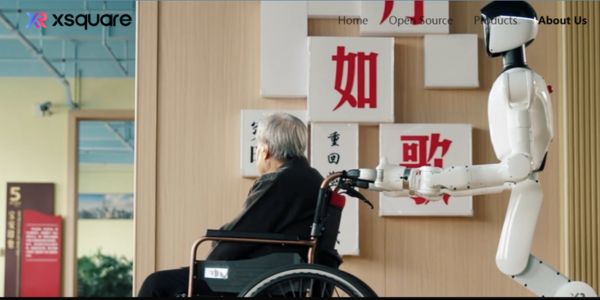
X Square Robot has raised $276M from Xiaomi, Sequoia China, and other internet giants to scale its WALL-A embodied AI model and wheeled humanoid robots from household cleaning into factories, logistics, and eldercare, reshaping how physical work is automated in China.
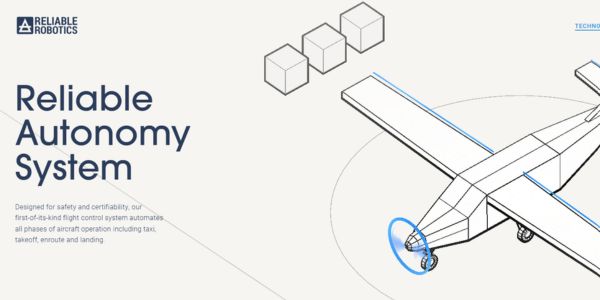
Reliable Robotics has secured $160M to scale production and deployment of its Reliable Autonomy System. This funding marks a pivotal transition for the company as it prepares for commercial cargo operations and works toward final FAA certification.
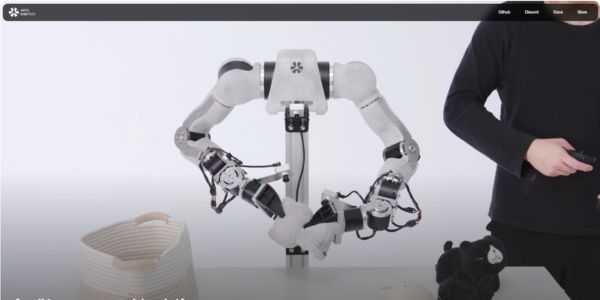
Anvil Robotics is building a physical AI modular robotics platform that replaces fragmented, bespoke stacks with composable hardware, software, and data tools. Founders, integrators, and investors should understand how this infrastructure shift could accelerate deployments in humanoids, logistics, and industrial automation.
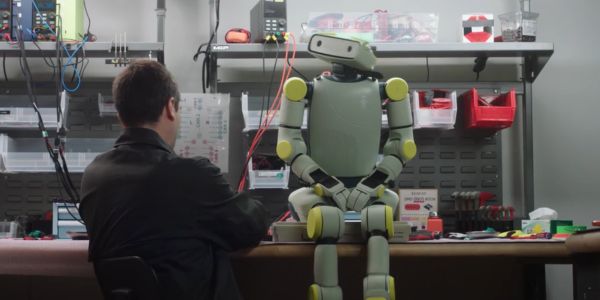
Amazon’s acquisition of Fauna Robotics brings the Sprout humanoid development platform into its Personal Robotics Group, highlighting a safety-first, developer-led approach to personal robots. The deal offers clues about how Amazon and other large buyers will evaluate humanoid platforms, from real-world deployments to exit opportunities for startups.
Mind Robotics has raised a $500 million Series A to build an AI-driven industrial automation platform trained on Rivian’s production lines. The Rivian spinout is targeting dexterous, variable factory tasks that traditional robots still struggle to automate, with a full-stack approach spanning models, hardware, and deployment infrastructure.
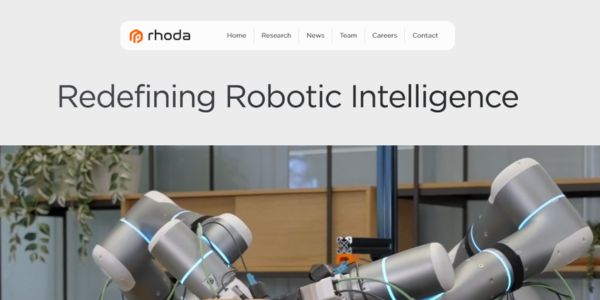
Rhoda AI has raised $450 million at a $1.7 billion valuation to launch FutureVision, a video-trained robot intelligence platform aimed at high-variability manufacturing and logistics. The feature examines the company’s Direct Video Action model, business model, and deployment challenges for founders, operators, and investors.
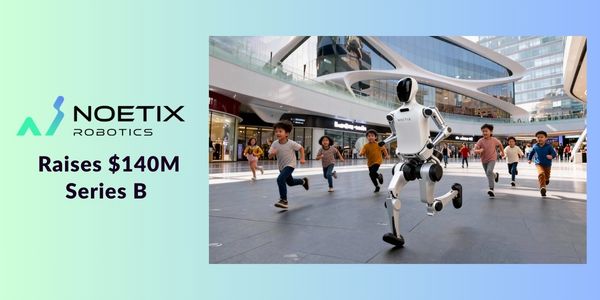
Noetix Robotics, a Beijing-based humanoid robotics startup, has closed a near-$140M Series B round to ramp up mass production and push its consumer-focused robots into everyday life.
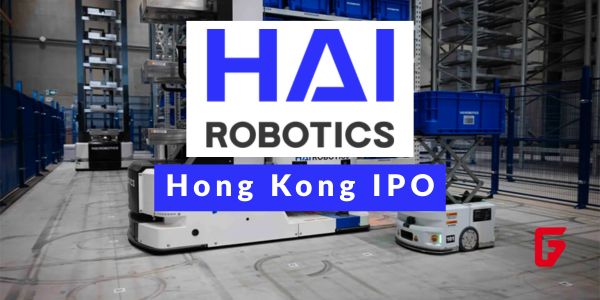
Shenzhen’s Hai Robotics, pioneer in ACR warehouse robots, files for HK IPO after raising over $500M in funding rounds led by top VCs.
Ouster’s $35M StereoLabs acquisition fuses lidar and ZED cameras into end-to-end Physical AI sensing. Founders Cecile Schmollgruber and team drive robotics revolution.
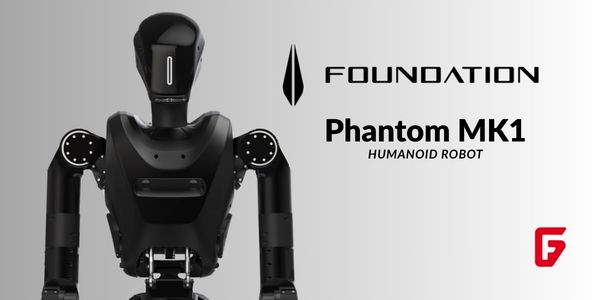
Foundation’s Phantom MK1 humanoid robot hits factories and eyes military use. Check specs, pilots, and bold 50k goal by 2027. Game-changer alert!
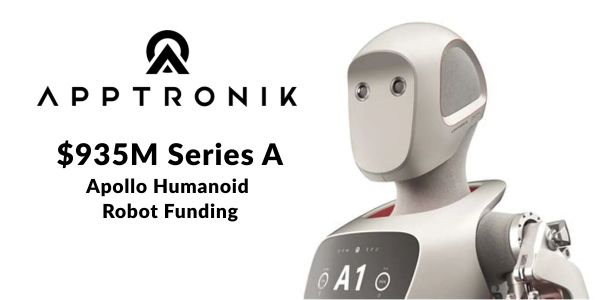
Humanoid robotics leader Apptronik just closed a massive $935M Series A, hitting a $5B valuation. Funds will boost Apollo production for factories and warehouses. Discover the investors and future plans.
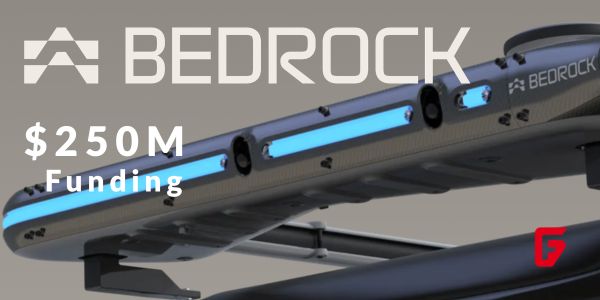
Exciting news: Bedrock Robotics just scored $270M in Series B to power up autonomous machines on job sites. Led by ex-Waymo pros, they’re tackling construction labor shortages head-on.
futureTEKnow is focused on identifying and promoting creators, disruptors and innovators, and serving as a vital resource for those interested in the latest advancements in technology.
© 2026 All Rights Reserved.