
Startups & Business News
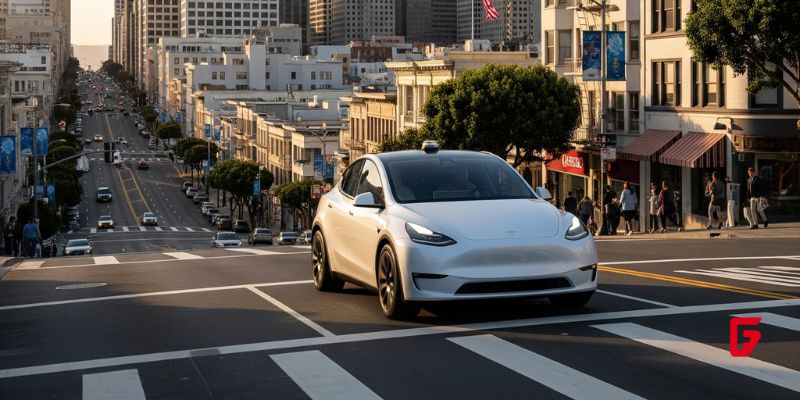
Tesla’s highly anticipated robotaxi service is officially expanding to the San Francisco Bay Area this weekend, signaling a bold step forward for the company’s autonomous ride-hailing ambitions. However, this early rollout highlights a blend of innovation and regulatory caution that is changing the landscape of driverless mobility in California.
How the Bay Area Launch Differs from Austin
After a month-long pilot in Austin, Texas, where select Tesla owners could hail robotaxi rides with an employee safety monitor in the passenger seat, Tesla is bringing its service to the Bay Area. This time, safety drivers will be seated in the driver’s seat, not the passenger seat—a move prompted by California’s strict regulatory requirements. Currently, Tesla lacks the necessary permits to operate fully autonomous vehicles without a human backup in California, so this initial launch is invite-only and limited to a geofenced zone covering Marin, San Jose, and the East Bay.
The Technology Behind Tesla Robotaxi
Tesla’s robotaxi Model Ys are equipped with advanced hardware: a modified sensor suite, improved FSD (Full Self-Driving) software, and a secondary communications unit. While the onboard software can handle driving in many scenarios, human intervention continues to be necessary—especially given recent incidents in Austin where vehicles have behaved unpredictably or required manual overrides.
Regulatory Challenges and Competitive Context
California regulators confirmed that Tesla has not applied for permits needed for fully driverless commercial operations, a requirement that companies like Waymo have already met. As a result, Tesla’s Bay Area service will look more like a premium ride-hail experience with a driver—rather than a truly autonomous robotaxi. This approach is expected to remain until the company satisfies state guidelines for autonomous vehicles, even as Elon Musk accelerates efforts to scale up robotaxi coverage nationwide.
Tesla faces a crowded field in autonomous mobility, with competitors Waymo and Cruise (until recently) already running driverless robotaxi programs in San Francisco. The pressure for Tesla to deliver on its self-driving promises is increasing as EV sales growth slows and investors look for business wins outside traditional automotive sales.
What’s Next for Tesla Robotaxi?
The current rollout is invite-only for local Tesla owners.
Rides will be facilitated via the Tesla Robotaxi app.
Each trip will still have a human in the driver’s seat as a safety monitor.
Full commercial driverless service awaits regulatory approval, which is currently pending.
Why This Launch Matters
This Bay Area expansion is a significant test for urban autonomous mobility and the limits imposed by today’s regulations. It also puts Tesla toe-to-toe with established driverless leaders. While the robotaxi experience is not yet fully driverless, this launch helps Tesla gather real-world driving data, refine its technology, and gradually build public trust ahead of regulatory green lights.
Tesla’s next chapter in urban mobility will depend not just on software updates, but also on how quickly they can navigate California’s evolving autonomous vehicle rules and keep up with fierce competition.

futureTEKnow
Editorial Team
Discover the companies and startups shaping tomorrow — explore the future of technology today.
Most Popular
Trending Companies
Latest Articles
futureTEKnow is focused on identifying and promoting creators, disruptors and innovators, and serving as a vital resource for those interested in the latest advancements in technology.
© 2026 All Rights Reserved.