






























Oslo, Norway
2014
Robotics, Consumer Robotics, Home Automation, Artificial Intelligence, Consumer Electronics, Advanced Manufacturing
1X Technologies is a humanoid robotics and artificial intelligence company developing robots that can perform physical tasks in environments designed for people. Its technology combines AI models, robotic hardware, computer vision, and motion control to support autonomous movement and object manipulation.
The company’s primary focus is general-purpose humanoid robots for household assistance. Its flagship robot, NEO, is designed to help with everyday activities such as organizing objects, retrieving items, and completing selected household chores.
1X Technologies designs and develops humanoid robots capable of navigating indoor spaces, interacting with household objects, and assisting people with physical tasks.
Its flagship product, NEO, is a bipedal home robot equipped with articulated hands, cameras, microphones, and an AI control system. The robot is designed to walk through homes, respond to spoken instructions, manipulate objects, and perform supported household activities.
The company develops robot learning and autonomous manipulation technology through its Redwood AI and 1X World Model systems. These technologies help robots interpret visual information, generate movements, and learn to perform tasks in unfamiliar environments.
1X also develops tendon-driven robotic actuators and compliant hardware that support controlled movements during interactions with people and objects.
For tasks NEO cannot yet complete independently, 1X provides an Expert Mode in which a trained operator can remotely guide the robot during a scheduled session. This allows selected activities to be completed with human assistance while supporting further robot learning.
The company also provides a mobile application for scheduling tasks, managing robot functions, and communicating with NEO remotely.
1X Technologies combines robotics hardware, machine learning, computer vision, and AI-based motion planning to develop humanoid robots capable of operating in household environments.
The company’s Redwood AI system supports robot perception, movement, and physical interaction. Its development has included vision-language-action learning, allowing the robot to connect visual observations and instructions with physical movements. Redwood also uses reinforcement learning for mobility tasks such as walking, turning, kneeling, and navigating stairs.
The 1X World Model (1XWM) is a video-based AI model designed to predict how physical environments change in response to robot actions. Earlier versions were used to evaluate possible actions and robot control policies. In 2026, 1X introduced a system that uses generated video predictions together with an inverse dynamics model to produce executable robot movements.
This approach allows the system to generate a possible sequence of physical events from an instruction and starting observation, then translate the predicted movement into robot actions. The technology is intended to improve the robot’s ability to attempt tasks beyond those demonstrated during training.
On the hardware side, NEO uses a patented tendon-driven actuation system designed to provide compliant movement during physical interaction. Its hands have 22 degrees of freedom, supporting different grasping and manipulation movements.
NEO also incorporates a soft exterior, stereo vision, microphones, and wireless connectivity. Its voice interface uses language models to support conversational instructions and household assistance.
Together, these technologies connect perception, movement, object handling, and spoken interaction within a single humanoid robotic platform. Practical performance still depends on the task, environment, software capabilities, and whether human guidance is required.
NEO is a general-purpose humanoid robot designed for household assistance. It uses two-legged mobility, articulated hands, AI-based perception, and conversational interaction to perform supported domestic tasks. The robot can navigate indoor spaces, retrieve objects, and assist with selected chores. Additional tasks may require scheduled human guidance through Expert Mode.
Redwood AI is a robot learning and control system developed for NEO. It connects visual perception with robot movement and object manipulation, supporting activities such as walking, grasping objects, and responding to physical tasks. Its development includes learning from robot demonstrations, real-world interactions, and reinforcement learning.
The 1X World Model is an AI system for predicting physical events and generating robot actions. It uses video-based learning to model how objects and environments respond to movement. Its newer architecture connects predicted video sequences with robot action trajectories, supporting experimentation with unfamiliar tasks and improving autonomous manipulation research.
The NEO mobile application provides an interface for managing household tasks, scheduling chores, communicating with the robot, and monitoring selected activities remotely. It complements NEO’s voice interface and provides additional control over its functions.
1X Technologies focuses primarily on household robotics and personal assistance, developing humanoid robots that can perform physical tasks in everyday indoor environments.
For household organization, NEO is designed to help retrieve objects, arrange items, and support activities such as tidying rooms and organizing shelves.
In domestic automation, the robot can assist with selected chores, including handling household objects, opening doors, and performing basic tasks supported by its current software capabilities.
The platform also supports conversational assistance, allowing users to ask questions, maintain lists, schedule reminders, and interact with AI through spoken instructions.
In robotics research, 1X’s technology supports the development of robot learning, physical manipulation, autonomous navigation, and AI models that connect visual information with real-world actions.
The company previously developed EVE for industrial and commercial robotics applications, including research into mobile manipulation and human-robot interaction.
NEO is available for pre-order through 1X Technologies. The company offers an Early Access ownership option and a monthly subscription plan. Its announced delivery schedule begins in 2026, although actual delivery timing depends on the order and availability.
NEO is designed to perform selected household tasks autonomously, but its capabilities depend on the activity and software version. Tasks it cannot complete independently may require a scheduled Expert Mode session with remote human assistance.
NEO uses AI models trained on video, robot movements, and real-world interactions. The 1X World Model helps connect predicted physical events with robot actions, while demonstrations and operational experience contribute to the development of new capabilities.
Unlike specialized robots designed for one activity, such as robotic vacuum cleaners, NEO has a humanoid body with legs, arms, and articulated hands. This design allows it to attempt different physical tasks in environments originally built for people.
NEO can perform supported activities without continuous human control. However, more complex or unfamiliar tasks may require remote guidance through Expert Mode. The level of autonomy varies depending on the task and the robot’s current capabilities.
Have an update, correction, or additional information about this company? Help us keep the futureTEKnow company database up to date by submitting the latest company information.

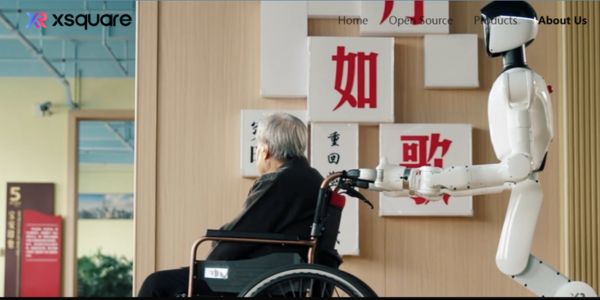
X Square Robot has raised $276M from Xiaomi, Sequoia China, and other internet giants to scale its WALL-A embodied AI model and wheeled humanoid robots from household cleaning into factories, logistics, and eldercare, reshaping how physical work is automated in China.
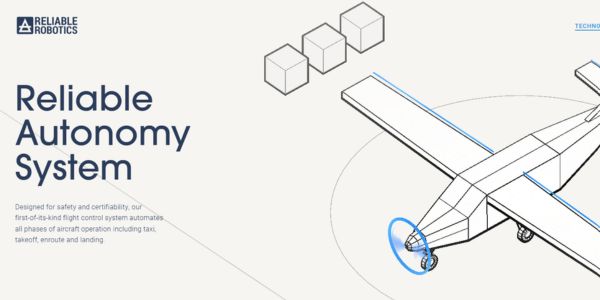
Reliable Robotics has secured $160M to scale production and deployment of its Reliable Autonomy System. This funding marks a pivotal transition for the company as it prepares for commercial cargo operations and works toward final FAA certification.
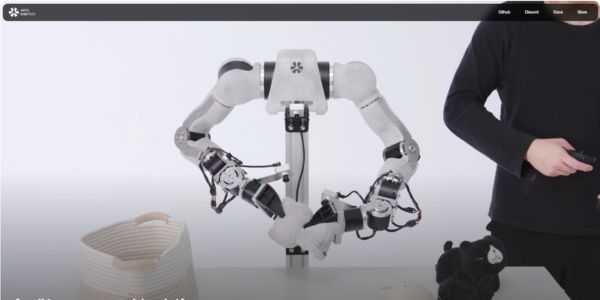
Anvil Robotics is building a physical AI modular robotics platform that replaces fragmented, bespoke stacks with composable hardware, software, and data tools. Founders, integrators, and investors should understand how this infrastructure shift could accelerate deployments in humanoids, logistics, and industrial automation.
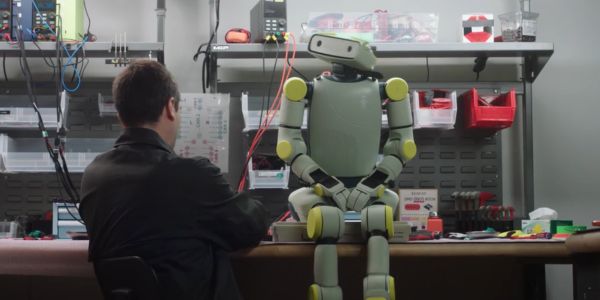
Amazon’s acquisition of Fauna Robotics brings the Sprout humanoid development platform into its Personal Robotics Group, highlighting a safety-first, developer-led approach to personal robots. The deal offers clues about how Amazon and other large buyers will evaluate humanoid platforms, from real-world deployments to exit opportunities for startups.
Mind Robotics has raised a $500 million Series A to build an AI-driven industrial automation platform trained on Rivian’s production lines. The Rivian spinout is targeting dexterous, variable factory tasks that traditional robots still struggle to automate, with a full-stack approach spanning models, hardware, and deployment infrastructure.
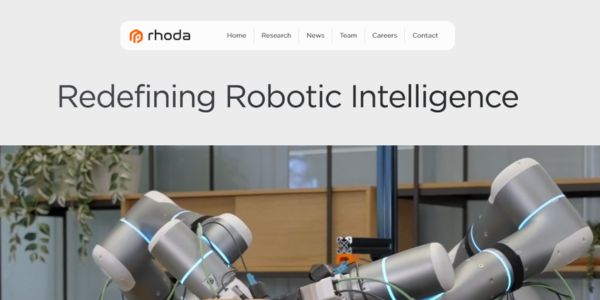
Rhoda AI has raised $450 million at a $1.7 billion valuation to launch FutureVision, a video-trained robot intelligence platform aimed at high-variability manufacturing and logistics. The feature examines the company’s Direct Video Action model, business model, and deployment challenges for founders, operators, and investors.
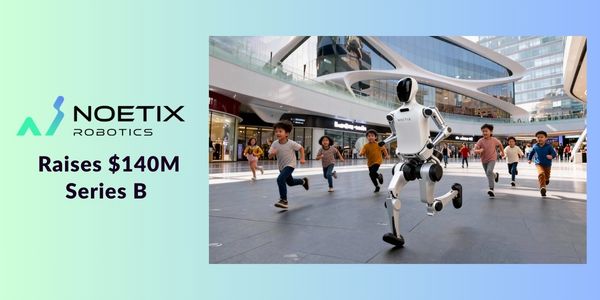
Noetix Robotics, a Beijing-based humanoid robotics startup, has closed a near-$140M Series B round to ramp up mass production and push its consumer-focused robots into everyday life.
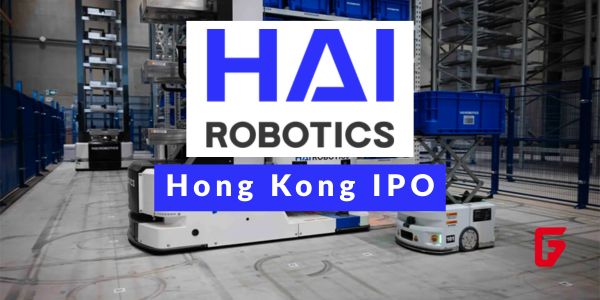
Shenzhen’s Hai Robotics, pioneer in ACR warehouse robots, files for HK IPO after raising over $500M in funding rounds led by top VCs.

Ouster’s $35M StereoLabs acquisition fuses lidar and ZED cameras into end-to-end Physical AI sensing. Founders Cecile Schmollgruber and team drive robotics revolution.
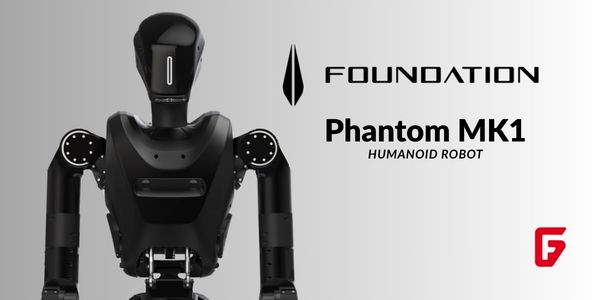
Foundation’s Phantom MK1 humanoid robot hits factories and eyes military use. Check specs, pilots, and bold 50k goal by 2027. Game-changer alert!
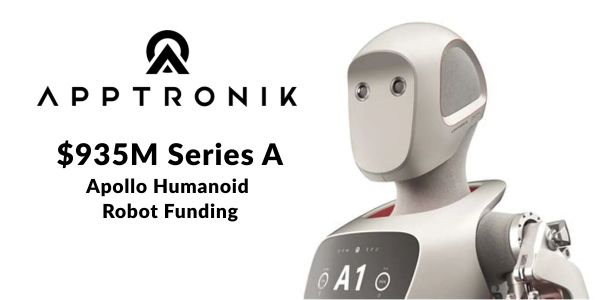
Humanoid robotics leader Apptronik just closed a massive $935M Series A, hitting a $5B valuation. Funds will boost Apollo production for factories and warehouses. Discover the investors and future plans.
Exciting news: Bedrock Robotics just scored $270M in Series B to power up autonomous machines on job sites. Led by ex-Waymo pros, they’re tackling construction labor shortages head-on.
futureTEKnow is focused on identifying and promoting creators, disruptors and innovators, and serving as a vital resource for those interested in the latest advancements in technology.
© 2026 All Rights Reserved.